
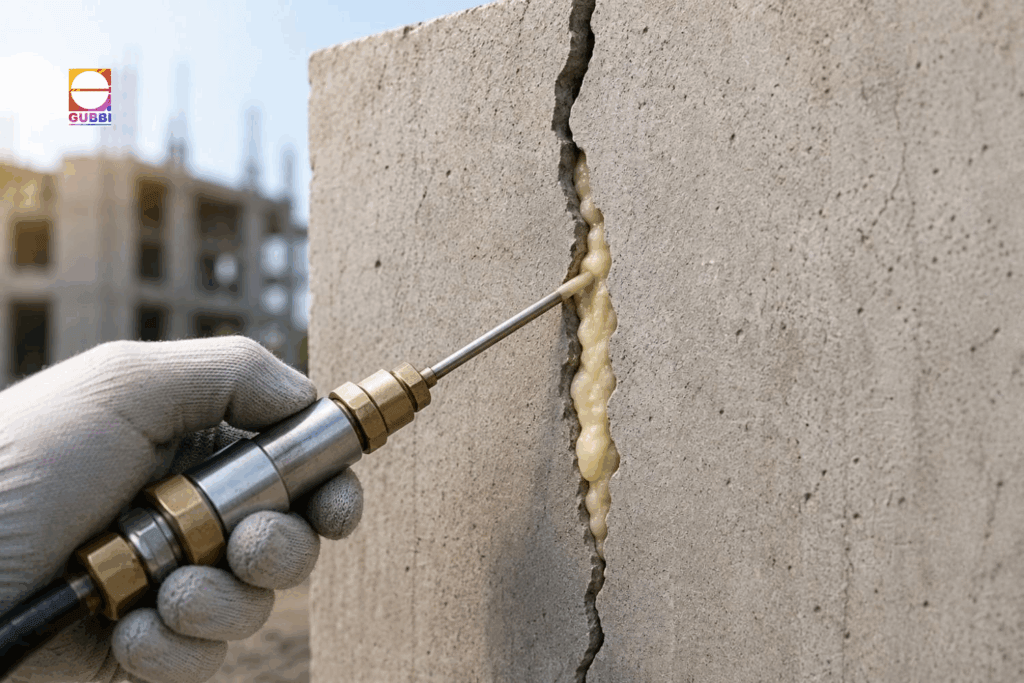
Structural deterioration is one of the biggest challenges faced by buildings, industrial structures, bridges, basements, and RCC components over time. Cracks in concrete, seepage issues, weakened foundations, voids beneath structures, and damaged RCC members can slowly compromise structural safety if left untreated.
In many cases, demolishing and reconstructing damaged portions is expensive, time-consuming, and often unnecessary.
This is where Injection Grouting becomes one of the most effective solutions for structural rehabilitation.
Professional Injection Grouting services help repair internal cracks, strengthen weak structural elements, stop water leakage, stabilize foundations, and restore structural integrity without causing major disruption to the existing structure.
Whether it is a commercial complex, industrial facility, retaining wall, basement, or infrastructure project, choosing the right rehabilitation approach can significantly increase durability and reduce long-term maintenance costs.
In this blog, we will understand how Injection Grouting helps restore structural strength, where it is used, and why it has become a preferred rehabilitation solution in civil engineering projects.
What is Injection Grouting?
Injection Grouting is a structural repair and rehabilitation process where specialized grout materials are injected under pressure into cracks, voids, joints, or weak soil zones to strengthen and stabilize structures.
Why Structural Rehabilitation Matters?
No structure remains unaffected by aging, environmental exposure, moisture penetration, poor workmanship, overloading, or material deterioration.
Over time, buildings begin showing warning signs such as:
- Cracks in slabs, beams, and RCC columns
- Water seepage through walls or basements
- Weakening of structural members
- Foundation settlement issues
- Honeycombing in concrete
- Corrosion-related concrete damage
- Leakage through joints and construction gaps
Ignoring these issues can lead to progressive structural damage and higher repair costs in the future.
Timely rehabilitation through Epoxy Injection Grouting can prevent damage from spreading while improving the structural life of the building.
Best Injection Grouting Methods for Structural Rehabilitation
Choosing the right method depends on the structural condition, crack size, leakage severity, and rehabilitation requirements.
1. Cementitious Injection Grouting
Cementitious grouting uses cement-based grout mixtures injected into cracks, voids, and weakened sections.
This method is commonly used for dam rehabilitation, foundation repair, tunnels, retaining walls, and large RCC structures.
2. Chemical Injection Grouting
Chemical grouting uses specially formulated chemicals that penetrate deep into cracks and weak soil zones.
Chemical injection grouting is widely preferred in basements, tunnels, underground structures, and water-retaining systems.
3. Epoxy Injection Grouting
Epoxy injection is one of the strongest methods for repairing structural cracks.
This technique uses epoxy resin to bond cracked concrete and restore structural integrity.
Epoxy injection grouting is commonly used for beams, slabs, columns, bridges, and industrial structures.
4. Polyurethane (PU) Injection Grouting
Polyurethane grouting is highly effective for stopping active water leakage.
When injected, PU grout expands and seals cracks permanently.
PU injection grouting is ideal for wet areas, leaking joints, tunnels, water tanks, and below-ground structures.
5. Microfine Cement Grouting
Microfine cement grouting uses ultrafine cement particles that penetrate deeper than standard cement grout.
This method is highly effective in infrastructure rehabilitation and weak soil strengthening.
6. Compaction Grouting
Compaction grouting involves injecting stiff grout into weak soil to improve density and bearing capacity.
Compaction grouting is widely used in foundation rehabilitation projects.
How to Choose the Right Injection Grouting Method?
The right Injection Grouting method depends on several factors:
Type of Structural Damage
Structural cracks may require epoxy injection grouting, while leakage problems often need PU injection grouting.
Crack Width
Fine cracks require low-viscosity chemical grouts, whereas larger voids may need cementitious grout.
Water Leakage Severity
Active leakage conditions generally require polyurethane injection grouting.
Soil Conditions
Weak or loose soil may require chemical grouting or compaction grouting.
Structural Load Requirements
For load-bearing members, high-strength epoxy injection systems are preferred.
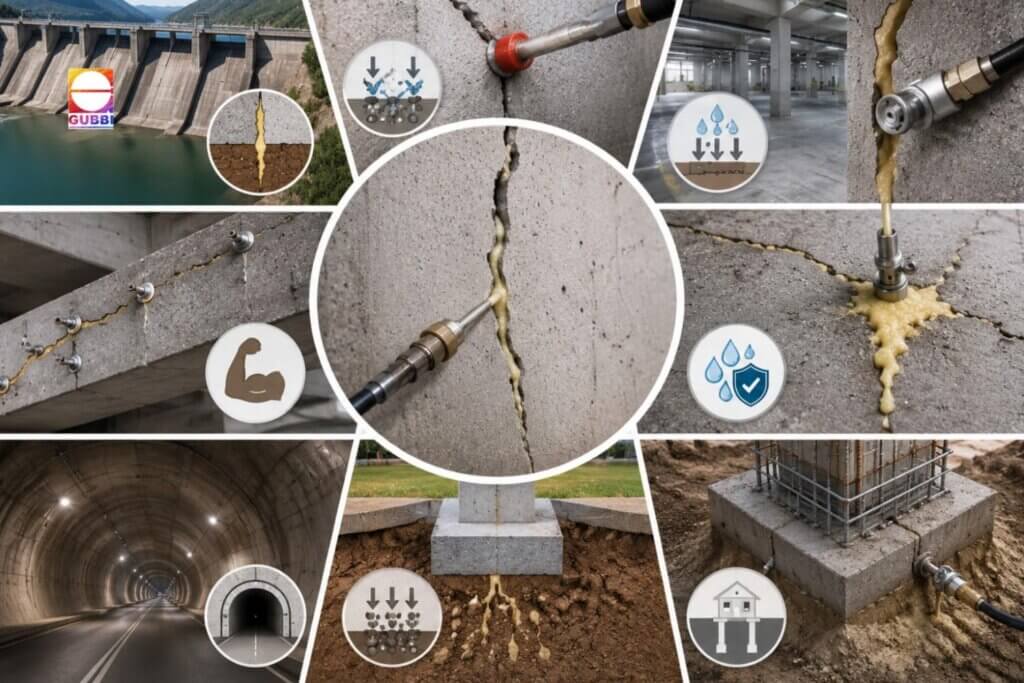
How Injection Grouting Helps Strengthen Damaged Structures?
One of the major reasons why Injection Grouting is widely preferred in civil engineering rehabilitation is its ability to repair damage internally without requiring demolition.
The process helps strengthen structural performance by filling hidden voids, sealing cracks, improving bonding, and reducing water ingress.
Restores Structural Stability
Cracks and internal weaknesses can significantly reduce load-bearing performance.
Injection grouting helps restore stability by strengthening weakened concrete sections and improving structural continuity.
This makes it highly effective for RCC rehabilitation projects, especially where structural performance has reduced due to aging or environmental exposure.
Stops Water Leakage and Seepage
Water penetration is one of the leading causes of structural deterioration.
Continuous moisture ingress often leads to reinforcement corrosion, concrete spalling, dampness, and weakening of structural members.
Professional Injection Grouting services help control:
- Basement leakage
- Terrace seepage
- Water tank leakage
- Retaining wall seepage
- Underground structure waterproofing
By sealing leakage paths internally, grouting helps protect structures from long-term water damage.
Strengthens Weak Foundations
Foundation settlement is a common issue caused by soil movement, void formation, or inadequate soil bearing capacity.
Injection grouting helps improve ground stability and strengthen weak foundation zones without disturbing the existing structure.
This minimizes settlement risks and improves structural safety.
Fills Hidden Voids Inside Concrete
Voids within concrete members often remain invisible until structural problems become severe.
These hidden cavities weaken the structure and reduce durability.
Injection grouting helps fill internal gaps and restore uniform structural performance, making it highly suitable for rehabilitation work.
Common Areas Where Injection Grouting is Used
Professional Injection Grouting is widely used across different civil engineering applications due to its versatility and long-term performance.
RCC Structural Rehabilitation
Damaged beams, slabs, columns, and concrete members can be strengthened through grouting to improve load-bearing performance and durability.
Basement Waterproofing
Water seepage through basement walls and underground structures can be controlled effectively using injection-based rehabilitation solutions.
Retaining Wall Rehabilitation
Retaining walls often develop cracks and seepage due to soil pressure and moisture penetration.
Injection grouting helps restore durability while improving resistance against further deterioration.
Industrial Structures
Factories, manufacturing plants, warehouses, and heavy industrial facilities often require structural rehabilitation to maintain performance under high operational loads.
Bridge and Infrastructure Repair
Infrastructure structures such as bridges, tunnels, and culverts commonly use Injection Grouting services to restore damaged concrete and improve durability.
Water-Retaining Structures
Water tanks, reservoirs, STP tanks, and treatment structures frequently experience leakage problems that can be controlled effectively through grouting.
Benefits of Choosing Injection Grouting for Structural Rehabilitation
When compared with traditional demolition-based repairs, Injection Grouting offers several practical advantages.
Minimal Structural Disturbance
Since repairs are carried out internally, there is less damage to surrounding structural elements.
Cost-Effective Rehabilitation
Repairing damaged areas is usually more affordable than complete structural replacement.
Faster Repair Process
Grouting rehabilitation generally requires less downtime, making it suitable for occupied buildings and industrial projects.
Improved Structural Durability
Professional grouting enhances overall structural performance and helps prevent recurring damage.
Long-Term Protection
Proper rehabilitation increases resistance against water penetration, settlement issues, and structural weakening.
Why Professional Injection Grouting Services Matter?
Structural rehabilitation is not a one-size-fits-all process.
Every crack, leakage problem, or structural weakness requires proper inspection before selecting the right rehabilitation method.
Professional civil engineering contractors assess:
- Structural condition
- Damage severity
- Crack depth and movement
- Water ingress source
- RCC member performance
- Foundation condition
Based on detailed inspection, the most suitable Injection Grouting solution is implemented for long-lasting performance.
Improper repair methods may only provide temporary results and often lead to recurring structural failures.
This is why choosing experienced professionals for structural rehabilitation becomes essential.
Signs You Should Consider Injection Grouting Immediately
You should consider a professional assessment if your structure shows:
- Visible RCC cracks
- Water leakage in basements or terraces
- Dampness inside walls
- Concrete deterioration or spalling
- Settlement-related cracks
- Weakening structural members
- Honeycombing in concrete surfaces
Early intervention can help avoid major structural repair expenses later.
Conclusion
Structural rehabilitation plays a critical role in maintaining the safety, durability, and performance of buildings and infrastructure.
Whether your structure is facing cracks, seepage, weakening RCC members, voids, or foundation instability, Injection Grouting offers an effective and long-lasting solution without major demolition.
From commercial properties to industrial and infrastructure projects, professional Injection Grouting services help restore structural strength, improve durability, and prevent further deterioration.
Acting early can save significant repair costs while protecting the long-term stability of your structure.