
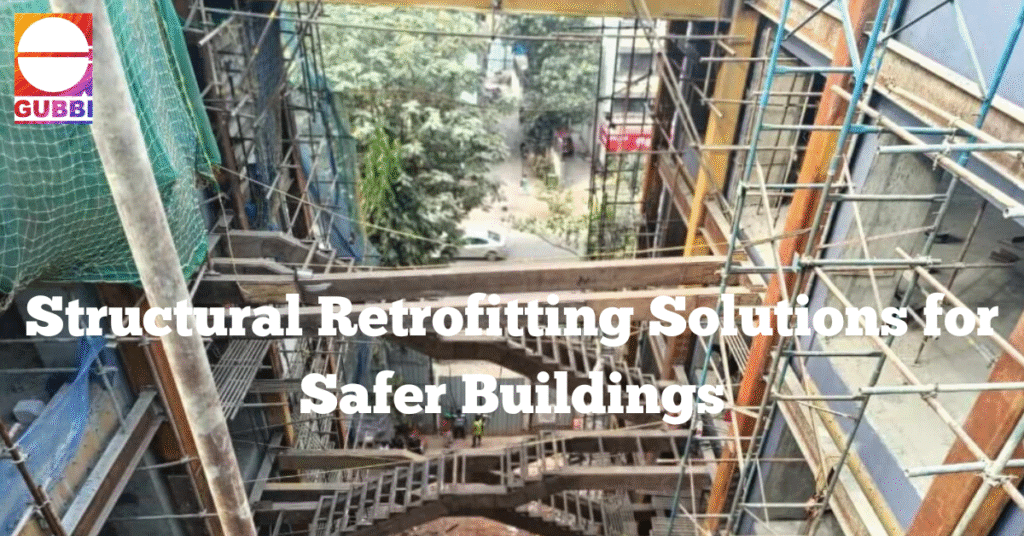
When industrial facilities age, owners and operators face a tough question: should they retrofit their existing structures or demolish and rebuild from scratch? While rebuilding may seem like a long-term solution, in most cases, Structural retrofitting is the far more cost-effective and practical choice for industrial environments.
Lower Capital Expenditure
Rebuilding an industrial facility requires massive capital investment. Costs include demolition, disposal of old structures, full reconstruction, and lost productivity during downtime. Retrofitting, by contrast, allows you to work with the existing framework, cutting costs by reusing structural components and focusing on upgrades. For industries with tight budgets, this means significant savings.
Reduced Downtime and Business Disruption
Every day an industrial plant is offline represents lost revenue. A rebuild can halt operations for months or even years, whereas retrofitting is often phased and completed in shorter timelines. In many cases, sections of a facility can remain operational while retrofitting takes place, minimising production interruptions.
Compliance with Modern Industry Standards
Industrial facilities must meet evolving safety, environmental, and performance regulations. Retrofitting allows owners to bring older plants up to compliance with current fire safety codes, seismic standards, and energy-efficiency requirements without the expense of a complete rebuild. For industries in regulated sectors, this approach ensures compliance while keeping costs under control.
Enhanced Structural Safety and Reliability
Factories, refineries, and warehouses often operate under heavy loads, vibrations, and environmental stress. Retrofitting can strengthen foundations, reinforce structural supports, and extend the lifespan of machinery housings. This not only improves safety for workers but also ensures continuity of operations, reducing the risk of catastrophic failures.
Energy Efficiency and Operating Cost Reduction
Energy represents a major operating expense in industrial facilities. Retrofitting can include modern insulation, upgraded HVAC, efficient lighting, and renewable energy solutions. Over time, these improvements reduce utility bills and operating costs, making the facility more profitable and sustainable.
Sustainability and Corporate Responsibility
Many industries are under pressure to reduce their environmental footprint. Demolition and rebuilding create significant waste and carbon emissions. Retrofitting aligns with sustainability goals by minimizing waste, reusing materials, and reducing embodied carbon. For companies focused on ESG (Environmental, Social, Governance) targets, this is a cost-effective way to demonstrate responsibility.
Maximizing ROI and Asset Value
Industrial retrofits often deliver better return on investment than rebuilds. By extending the lifespan of existing facilities while improving performance, owners benefit from reduced capital costs, shorter downtime, and increased asset value. A retrofitted facility becomes more attractive to investors, tenants, and buyers alike.
The Bottom Line for Industrial Owners
Rebuilding is sometimes necessary, but in most industrial cases, retrofitting offers a superior balance of cost, safety, compliance, and efficiency. It saves money upfront, reduces downtime, improves operations, and aligns with sustainability goals.
Looking to upgrade your facility without the disruption of full reconstruction? Contact Gubbi Civil Engineers Limited for expert structural retrofitting solutions tailored to commercial, industrial, and MNC buildings.
The Bottom Line for Industrial Owners
For industrial owners, the decision between rebuilding and retrofitting is a strategic one. While complete reconstruction may be unavoidable in rare cases of severe structural failure, structural retrofitting is often the smarter, more practical choice for most industrial facilities. It delivers an ideal balance of cost efficiency, safety, regulatory compliance, and operational continuity, making it the preferred solution across manufacturing plants, warehouses, logistics hubs, and MNC facilities.
One of the biggest advantages of retrofitting is significant cost savings. Compared to rebuilding, retrofitting requires lower capital investment while still achieving critical upgrades in load capacity, structural strength, and seismic performance. This allows industrial owners to allocate resources more efficiently without compromising safety or performance.
Downtime is another major concern in industrial environments. Rebuilding often means long shutdowns, production losses, and logistical challenges. Retrofitting minimizes disruption, as strengthening and repair works can be planned in phases, allowing operations to continue with minimal impact. This directly translates into improved productivity and business continuity.
From a safety and compliance perspective, retrofitting ensures existing structures meet current codes, safety standards, and operational requirements. It enhances resistance to seismic forces, heavy machinery loads, and environmental stress, creating a safer working environment for employees and assets.
Retrofitting also supports sustainability goals. By extending the life of existing structures, it reduces construction waste, conserves materials, and lowers the carbon footprint associated with demolition and new construction an increasingly important factor for ESG-driven organizations and global enterprises.
Looking to upgrade your facility without the disruption of full reconstruction? Gubbi Civil Engineers Limited provides expert structural retrofitting solutions tailored for commercial, industrial, and MNC buildings. With detailed structural assessments, proven engineering methodologies, and a focus on safety and durability, we help industrial owners strengthen their facilities for long-term performance and growth.
Contact us today to explore a smarter, cost-effective approach to upgrading your infrastructure.
Strengthening Structures with Advanced Engineering Solutions in India