
Polymer Modified Mortar Services
Polymer Modified Mortar Services for Durable Concrete Repair
Polymer Modified Mortar Services by Gubbi Civil Engineers Polymer Modified Mortar (PMM) is a high-performance repair material designed to enhance concrete durability, adhesion, and strength. Our Polymer Modified Mortar Services provide long-lasting solutions for bridges, buildings, industrial facilities, and infrastructure.
What is Polymer Modified Mortar?
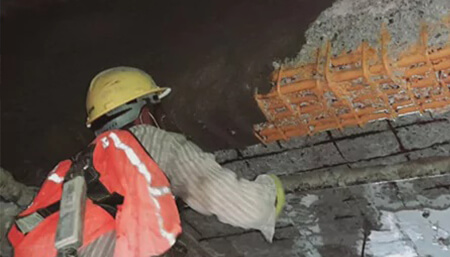
Polymer Modified Mortar is a specialized cementitious material more appropriate with polymers, enhancing its bonding strength, flexibility, and sturdiness. This kind of mortar is broadly used for structural maintenance and healing of RCC systems because of its excessive workability, low shrinkage, and superior adhesion.
Applications of Polymer Modified Mortar
Our Polymer Modified Mortar Services are ideal for:
Reinforced Concrete (RCC) Structure Repairs – Fixing cracks and spalling concrete
Hydro Structures – Repair of water-retaining structures
Industrial Flooring – Enhancing durability and load-bearing capacity
Masonry Repairs – Strengthening walls, beams, and columns
Chemical and Corrosion Resistance – Protection against environmental degradation
Fire Damage Repair – Restoring integrity to damaged concrete & reinforcement bars
Why Choose Our Polymer Mortar Services?
High Bond Strength – Strong adhesion to concrete and cementitious substrates
Reduced Shrinkage – Minimizes cracking and ensures long-term durability
Excellent Workability – Can be applied in thin layers for detailed repairs
Chemical and Corrosion Resistance – Protects structures against harsh environmental conditions
Quick and Efficient Application – Faster curing time for reduced downtime
Gubbi Civil Engineers - Leading Experts in Structural Strengthening & Retrofitting
Gubbi Civil Engineers Limited is a trusted name in Mumbai, India, providing retro-fitting, rehabilitation, and structural strengthening services. Our expertise includes:
Reinforced Concrete Jacketing
Shotcreting / Guniting
Rebaring in RCC Structures
Fibre Wrap Systems (Carbon and Glass Fiber Wrapping)
Epoxy Grouting and Injection Systems
Corrosion Protection for Reinforcement Bars
How Our Polymer Modified Mortar Service Works?
- Inspection and Assessment: Our experts inspect the structural damage and determine the best repair solution
- Surface Preparation: Cleaning, roughening, and removing loose materials for better adhesion.
- Application of Polymer Modified Mortar: A high-strength polymer-modified repair mortar is applied to restore the surface.
- Curing and Finishing: Proper curing ensures long-term durability and structural integrity.
Advantages of Polymer Modified Mortar Services
Long-lasting and cost-effective repairs
Improved tensile and compressive strength
Ideal for thin-layer repairs without compromising strength
Resistant to moisture, chemicals, and thermal expansion
Eco-friendly and sustainable repair solution
How Polymer Modified Mortar Relates to Building Retrofitting?
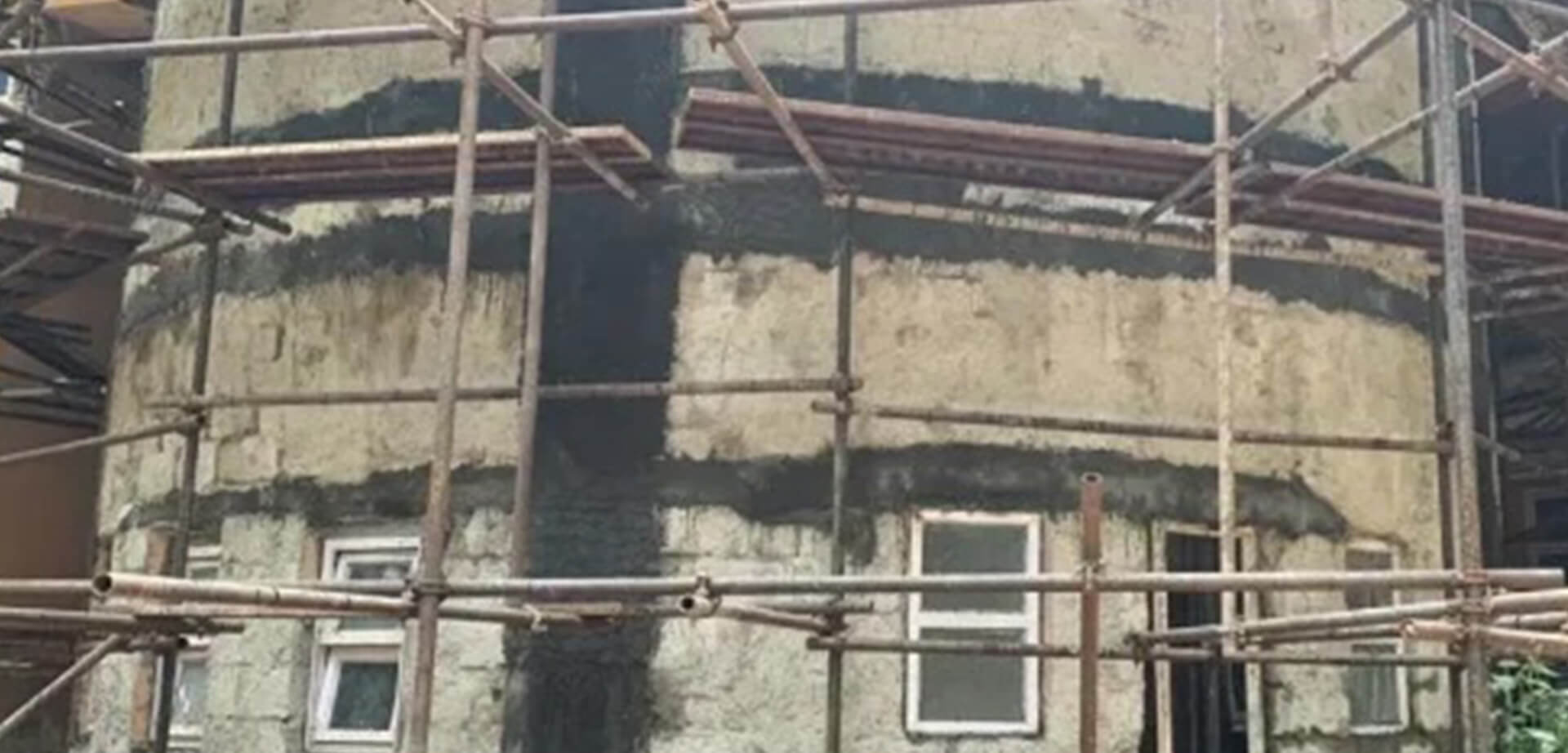
Polymer Modified Mortar is widely used in building retrofitting to restore structural strength, improve durability, and extend the service life of aging structures. Retrofitting typically involves repairing damaged concrete, filling cracks, and upgrading load-bearing elements to meet current safety standards. This material bonds strongly with existing concrete and masonry, ensuring effective integration between old and new surfaces. Its flexibility and high strength allow it to accommodate minor structural movements and thermal variations without cracking.
It also offers excellent resistance to water ingress, chemicals, and environmental exposure, helping prevent future deterioration. Commonly applied in beams, columns, slabs, and shear walls, it works effectively alongside techniques such as column jacketing, beam strengthening, carbon fiber wrapping, and seismic retrofitting. Overall, it plays a key role in enhancing structural performance, safety, and long-term reliability in modern building rehabilitation projects.