
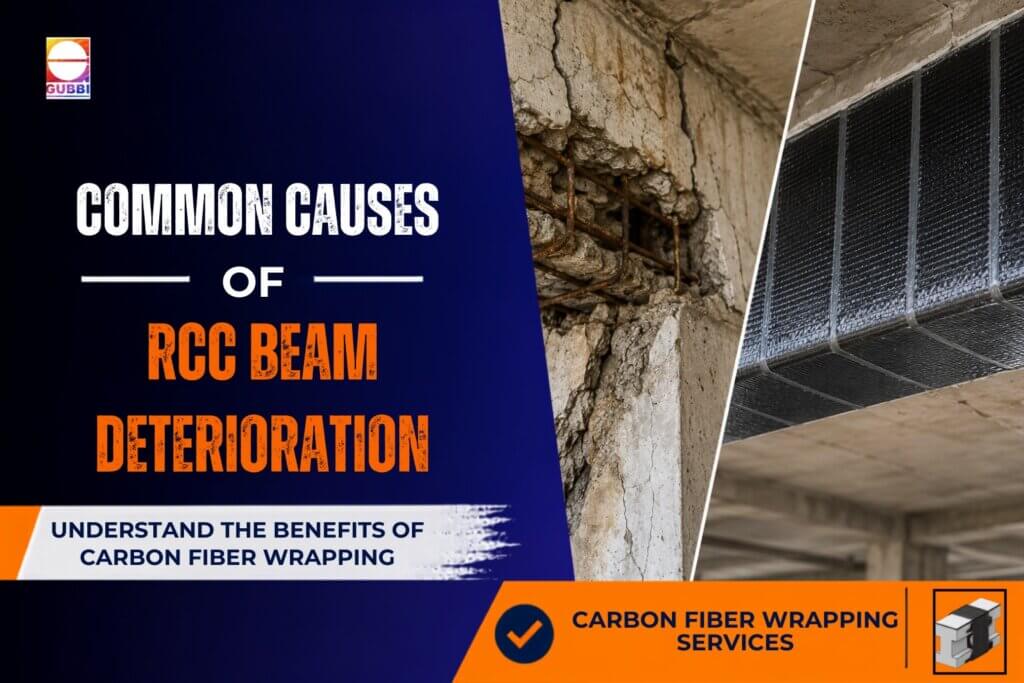
RCC beams are critical structural elements that transfer loads safely throughout a building or infrastructure asset. Over time, exposure to environmental conditions, increased loading and material degradation can lead to RCC beam deterioration, reducing structural performance and increasing safety risks. If left untreated, deterioration can result in costly repairs, operational disruptions and, in severe cases, structural failure.
Fortunately, not every deteriorated beam requires replacement. With proper structural assessment, modern strengthening solutions such as Carbon Fiber Wrapping can restore structural capacity, improve durability and extend the service life of RCC beams.
What Is RCC Beam Deterioration?
RCC beam deterioration is the gradual weakening of reinforced concrete beams due to physical, chemical or structural damage. As deterioration progresses, the beam loses its ability to safely resist bending, shear and applied loads.
The extent of deterioration depends on several factors, including exposure conditions, construction quality, maintenance practices and changes in structural loading.
Common Causes of RCC Beam Deterioration
1. Reinforcement Corrosion
Corrosion of embedded steel reinforcement is one of the leading causes of RCC beam deterioration. Moisture, oxygen and chlorides penetrate the concrete cover, causing steel to corrode and expand. This expansion creates internal pressure that leads to cracking, concrete spalling and reduced structural strength.
2. Carbonation of Concrete
Carbonation occurs when carbon dioxide reacts with concrete, reducing its alkalinity and removing the natural protection around reinforcing steel. Once this protective layer is lost, corrosion accelerates, contributing to progressive beam deterioration.
3. Excessive Structural Loading
Many buildings undergo functional changes during their service life, such as additional floors, heavier machinery or increased storage loads. When beams are subjected to loads beyond their original design capacity, excessive deflection, cracking and structural distress can occur.
4. Poor Construction Practices
Construction defects can significantly reduce the durability of RCC beams. Common issues include:
- Honeycombing
- Poor concrete compaction
- Inadequate concrete cover
- Incorrect reinforcement placement
- Low-quality concrete
- Improper curing
These defects create weak zones that accelerate deterioration.
5. Water Ingress
Persistent water leakage allows moisture to reach reinforcing steel, increasing the likelihood of corrosion and reducing concrete durability. Waterproofing failures and drainage issues are common contributors to long-term beam deterioration.
6. Chemical Exposure
Industrial environments, marine structures and wastewater facilities are frequently exposed to chlorides, sulphates and other aggressive chemicals. These substances attack concrete and reinforcement, reducing structural performance over time.
7. Lack of Preventive Maintenance
Small cracks and minor defects can quickly develop into significant structural problems if routine inspections and timely repairs are neglected. Preventive maintenance plays a vital role in reducing long-term deterioration.
8. Seismic Activity and Dynamic Loading
Repeated vibration, heavy traffic, machinery operation and seismic forces subject RCC beams to cyclic stresses that can lead to fatigue cracking and gradual structural degradation.
Warning Signs of RCC Beam Deterioration
Early identification helps prevent extensive structural damage. Common warning signs include:
- Flexural or shear cracks
- Concrete spalling
- Exposed reinforcement
- Rust stains
- Excessive beam deflection
- Water seepage
- Concrete delamination
- Surface scaling
Any of these signs should prompt a professional structural assessment.
Why Address RCC Beam Deterioration Early?
Ignoring RCC beam deterioration can result in:
- Reduced load-carrying capacity
- Progressive structural damage
- Increased repair costs
- Operational downtime
- Shortened service life
- Higher rehabilitation expenses
- Safety risks
Timely intervention helps preserve structural integrity while avoiding more extensive and expensive repairs.
How Carbon Fiber Wrapping Helps Strengthen Deteriorated RCC Beams?
When structural assessment confirms that a beam requires strengthening, Carbon Fiber Wrapping is one of the most effective rehabilitation techniques available.
Carbon Fiber Wrapping involves externally bonding high-strength carbon fibre reinforced polymer (CFRP) sheets to the surface of RCC beams using specialised structural epoxy. The carbon fibre acts as additional reinforcement, improving the beam’s ability to resist bending and shear forces without significantly increasing its weight or dimensions.
Unlike conventional strengthening methods, Carbon Fiber Wrapping can often be completed with minimal disruption to building operations, making it suitable for commercial, industrial and infrastructure projects.
Benefits of Carbon Fiber Wrapping
Increases Structural Capacity
Carbon Fiber Wrapping enhances the flexural and shear strength of RCC beams, allowing them to safely carry increased loads.
Lightweight Strengthening Solution
Carbon fibre adds negligible dead load to the structure while delivering exceptional tensile strength.
Minimal Increase in Beam Size
Since the CFRP system is extremely thin, structural dimensions remain virtually unchanged.
Excellent Corrosion Resistance
Unlike steel strengthening systems, carbon fibre is resistant to corrosion, making it suitable for aggressive industrial and coastal environments.
Faster Installation
Professional Carbon Fiber Wrapping Services can often be completed more quickly than traditional strengthening techniques, reducing downtime.
Extends Structural Service Life
Properly designed and installed Carbon Fiber Wrapping systems improve durability and help extend the operational life of existing RCC structures.
When Is Carbon Fiber Wrapping Recommended?
Engineers commonly recommend Carbon Fiber Wrapping for RCC beams when:
- Structural loads have increased
- Flexural capacity needs improvement
- Shear strengthening is required
- Corrosion has reduced reinforcement capacity
- Structural rehabilitation is preferred over replacement
- Seismic strengthening is required
- Existing beams require long-term strengthening
A detailed structural assessment is essential before selecting any strengthening method.
Choosing Experienced Carbon Fiber Wrapping Contractors
The long-term performance of a strengthening system depends on proper engineering design, quality materials and skilled installation.
When selecting Carbon Fiber Wrapping Contractors, consider:
- Experience in structural strengthening projects
- Expertise in RCC rehabilitation
- Proven project portfolio
- Compliance with recognised engineering standards
- Skilled installation teams
- Comprehensive structural assessment capabilities
Working with experienced contractors helps ensure the strengthening system performs as intended and delivers long-term structural reliability.
What are the common causes of RCC beam deterioration?
RCC beam deterioration is commonly caused by reinforcement corrosion, carbonation of concrete, water ingress, excessive structural loading, poor construction practices, chemical exposure, inadequate maintenance and ageing. Early identification helps prevent structural damage and costly repairs.
What are the warning signs of RCC beam deterioration?
Common signs of RCC beam deterioration include concrete cracks, spalling, exposed reinforcement, rust stains, excessive beam deflection, water seepage and concrete delamination. A professional structural assessment is recommended if these symptoms are observed.
Can RCC beam deterioration be repaired without replacing the beam?
In many cases, deteriorated RCC beams can be repaired and strengthened without replacement. Depending on the condition of the beam, engineers may recommend repair techniques combined with Carbon Fiber Wrapping to restore structural strength and extend service life.
How does Carbon Fiber Wrapping help strengthen deteriorated RCC beams?
Carbon Fiber Wrapping enhances the load-carrying capacity of weakened RCC beams, controls crack propagation, improves structural performance and extends the service life of concrete structures. It is widely used for rehabilitation projects where demolition is not required.
When should Carbon Fiber Wrapping be used for RCC beam strengthening?
Carbon Fiber Wrapping is recommended when RCC beams have reduced structural capacity due to deterioration, increased loading, corrosion damage, seismic upgrades or rehabilitation requirements. A structural engineer should assess the beam before selecting the strengthening method.
What are the benefits of Carbon Fiber Wrapping compared to conventional strengthening methods?
Compared with traditional strengthening methods, Carbon Fiber Wrapping offers several advantages, including lightweight construction, high tensile strength, corrosion resistance, minimal increase in beam dimensions, faster installation and long-term durability.
How do I choose the right Carbon Fiber Wrapping contractors?
Choose Carbon Fiber Wrapping Contractors with proven experience in structural rehabilitation, qualified engineering teams, quality-certified materials, successful project references and expertise in RCC strengthening solutions.
How can I prevent RCC beam deterioration?
Regular structural inspections, timely crack repairs, waterproofing, corrosion protection, proper drainage, preventive maintenance and early rehabilitation significantly reduce the risk of RCC beam deterioration and help extend the life of concrete structures.
Conclusion
RCC beam deterioration is a progressive structural issue that should never be ignored. Corrosion, carbonation, excessive loading, construction defects and water ingress can all reduce the strength and durability of RCC beams over time.
When deterioration affects structural performance, Carbon Fiber Wrapping offers a reliable, lightweight and durable strengthening solution. By improving load-carrying capacity, increasing durability and extending service life, it has become a preferred rehabilitation method for buildings, industrial facilities and infrastructure projects.
If your RCC beams are affected by deterioration, timely strengthening can prevent further damage and extend the life of your structure. Our experienced Carbon Fiber Wrapping Contractors deliver engineered Carbon Fiber Wrapping Services that improve load-carrying capacity, enhance durability and support long-term structural performance.
Contact our structural strengthening experts today for a professional assessment.