
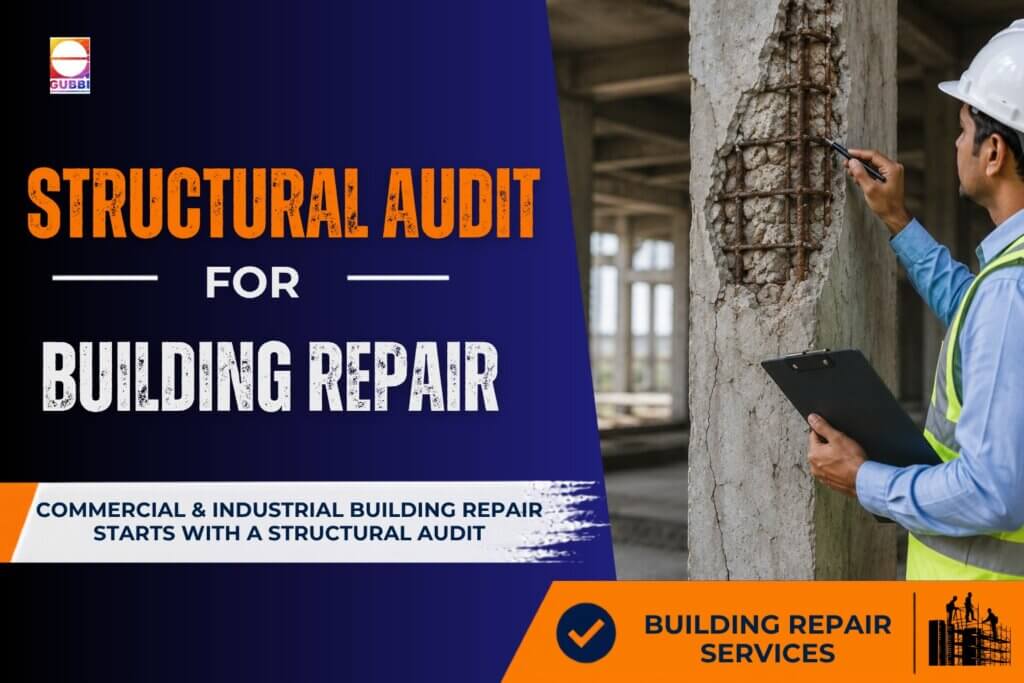
Structural Audit is the first and most important step towards safe, effective, and long-lasting building repair. Over time, commercial and industrial buildings are exposed to ageing, corrosion, water ingress, continuous loading, environmental conditions, and operational stresses that gradually weaken their structural performance.
Visible signs such as cracks, concrete spalling, leakage, and rust stains often indicate deeper structural problems. Repairing only these symptoms without identifying the underlying cause can lead to recurring failures, higher maintenance costs, and reduced service life.
This is where a professional audit for structures becomes essential. It provides engineers with a comprehensive assessment of a building’s condition, identifies hidden structural deficiencies, determines the root causes of deterioration, evaluates structural capacity, and recommends the most suitable repair and rehabilitation strategy.
For commercial and industrial buildings, a structural audit is more than an inspection it is the engineering foundation for safe, durable, and cost-effective building repair.
What is a Structural Audit?
A structural audit is a comprehensive engineering assessment carried out to evaluate the safety, durability, and serviceability of an existing structure.
Unlike a routine visual inspection, an audit combines engineering analysis with condition assessment, material testing, structural evaluation, and detailed reporting to determine the actual health of the structure. The audit provides the technical basis for selecting the right building rehabilitation services rather than relying on assumptions.
Why is a Structural Audit Critical Before Building Repair?
1. Identifies the Root Cause of Structural Damage
Visible cracks rarely represent the actual problem.
The underlying causes may include:
- Reinforcement corrosion
- Water ingress
- Carbonation
- Chloride attack
- Foundation settlement
- Excessive loading
- Construction defects
- Poor workmanship
- Chemical exposure
- Thermal movement
Repairing only the visible damage without addressing these causes can lead to repeated failures.
A structural audit identifies the source of deterioration so repairs become permanent rather than temporary.
2. Prevents Unnecessary Repair Costs
Many buildings undergo extensive repairs where only localized intervention is required.
Conversely, some structures receive cosmetic repairs while major structural deterioration remains unnoticed.
A structural audit helps optimize repair scope by identifying:
- Members requiring immediate repair
- Components suitable for strengthening
- Areas requiring monitoring
- Elements beyond economical repair
This results in more efficient use of repair budgets.
3. Improves Structural Safety
Safety is the primary objective of every building repair project.
Structural audits evaluate:
- Load-carrying capacity
- Structural stability
- RCC deterioration
- Reinforcement corrosion
- Deflection
- Crack severity
- Foundation behaviour
- Durability of structural members
Early identification of these issues significantly reduces the risk of structural failures.
4. Supports Long-Term Asset Management
Commercial and industrial facilities represent major capital investments.
A structural audit helps facility managers plan:
- Repair schedules
- Maintenance budgets
- Rehabilitation programs
- Structural strengthening
- Future renovations
- Capacity upgrades
Instead of reactive maintenance, organizations can adopt planned asset management strategies.
5. Reduces Operational Downtime
Unexpected structural failures often interrupt production, warehouse operations, commercial activities, and tenant occupancy.
A structural audit enables repair planning before deterioration becomes critical, minimizing disruptions and costly shutdowns.
Common Problems Identified During Structural Audits
Commercial and industrial building structures commonly experience:
- Structural cracks
- Concrete spalling
- Reinforcement corrosion
- Honeycombing
- Roof leakage
- Water seepage
- Damp walls
- Chemical attack
- Carbonation damage
- Chloride-induced corrosion
- Settlement cracks
- Expansion joint failures
- Delamination
- Beam and slab distress
- Column deterioration
- Foundation movement
Detecting these issues early helps reduce repair complexity and overall lifecycle costs.
When Should You Conduct a Structural Audit For Buildings?
A structural audit is recommended when:
Ageing Buildings
Buildings over 15–20 years old should undergo periodic structural assessments to identify age-related deterioration.
Before Major Renovation
Structural capacity should always be verified before adding equipment, increasing floor loads, or modifying building layouts.
Visible Structural Distress
Signs such as cracks, corrosion, concrete spalling, leakage, or unusual deflection require immediate engineering evaluation.
Industrial Facilities
Manufacturing plants exposed to vibration, heavy machinery, chemicals, or dynamic loading require regular structural audits.
Commercial Buildings
Office complexes, shopping centres, hospitals, educational institutions, hotels, and public infrastructure benefit from periodic structural assessments to ensure continued safety and compliance.
Key Components of a Professional Structural Audit
An effective structural audit generally includes:
Visual Condition Assessment
Engineers inspect the building for visible deterioration, cracking, deformation, corrosion, leakage, and structural distress.
Structural Investigation
Critical structural members such as columns, beams, slabs, foundations, retaining walls, and roof systems are examined for performance.
Non-Destructive Testing (NDT)
Various testing methods help determine material quality without damaging the structure.
Common techniques include:
- Rebound Hammer Test
- Ultrasonic Pulse Velocity (UPV)
- Cover Meter Survey
- Half-Cell Potential Test
- Carbonation Test
- Core Testing (where required)
Material Assessment
Concrete strength, reinforcement condition, durability, and corrosion levels are evaluated.
Structural Analysis
Engineers verify whether the building can safely sustain existing and future operational loads.
Repair Recommendations
The audit concludes with engineering recommendations for:
- RCC repair
- Crack repair
- Epoxy injection
- PU grouting
- Micro concrete jacketing
- Structural strengthening
- Carbon fiber wrapping
- RCC Column jacketing
- Beam strengthening
- Waterproofing
- Corrosion protection
Benefits of Structural Audits for Commercial and Industrial Buildings
A professionally conducted structural audit offers several long-term benefits:
- Extends building service life
- Improves structural reliability
- Reduces emergency repairs
- Optimizes maintenance budgets
- Enhances occupant safety
- Prevents structural failures
- Supports insurance and compliance requirements
- Assists in lifecycle asset management
- Improves operational continuity
- Enables cost-effective building repair planning
Choosing the Right Building Repair Contractors
The effectiveness of any building repair project depends on accurate diagnosis before repairs begin.
Experienced building repair contractors should possess expertise in:
- Structural investigation
- Condition assessment
- RCC repair
- Structural rehabilitation
- Waterproofing
- Corrosion mitigation
- Structural strengthening
- Industrial repair methodologies
- Repair design implementation
- Quality assurance and testing
A repair strategy based on engineering evidence delivers significantly better long-term performance than repairs based solely on visual observations.
Why Structural Audits Save More Than They Cost?
Many organizations view structural audits as an additional expense. In reality, they often prevent far greater costs by identifying deterioration early, avoiding unnecessary repairs, reducing operational disruptions, and extending the service life of critical assets.
For commercial and industrial facilities, a structural audit is a proactive investment that improves safety, protects infrastructure, and enables informed decisions about repair and rehabilitation.
Is a structural audit necessary before building repair?
Yes. A structural audit identifies the root cause of deterioration and helps engineers recommend the most effective repair solution.
What buildings require structural audits?
Commercial buildings, industrial facilities, warehouses, factories, educational institutions, hospitals, residential societies, and ageing RCC structures should undergo periodic structural audits.
Can a structural audit reduce repair costs?
Yes. It helps avoid unnecessary repairs, detects problems early, and prioritizes repairs based on structural condition, reducing long-term maintenance expenses.
How often should commercial buildings undergo a structural audit?
The frequency depends on the building’s age, usage, environmental exposure, and local regulations. Older or heavily used structures typically benefit from periodic audits every few years or after significant events.
What services typically follow a structural audit?
Depending on the findings, recommended solutions may include RCC repair, crack injection, micro-concrete repairs, carbon fiber wrapping, column jacketing, corrosion protection, waterproofing, and structural strengthening.
Conclusion
Every successful building rehabilitation project begins with understanding the actual condition of the structure.
A structural audit provides the technical insight needed to identify hidden defects, evaluate structural integrity, determine the root causes of deterioration, and develop an effective repair strategy. Whether managing an industrial plant, warehouse, commercial complex, institutional building, or infrastructure asset, conducting a structural audit before repair helps minimize risks, optimize costs, and ensure long-term structural performance.
Gubbi Civil Engineers Limited, specializes in structural audits, condition assessment, building repair, and structural rehabilitation, RCC repair, strengthening, and waterproofing services for commercial and industrial structures. With decades of engineering expertise, we help organizations make informed repair decisions that enhance safety, durability, and asset value.