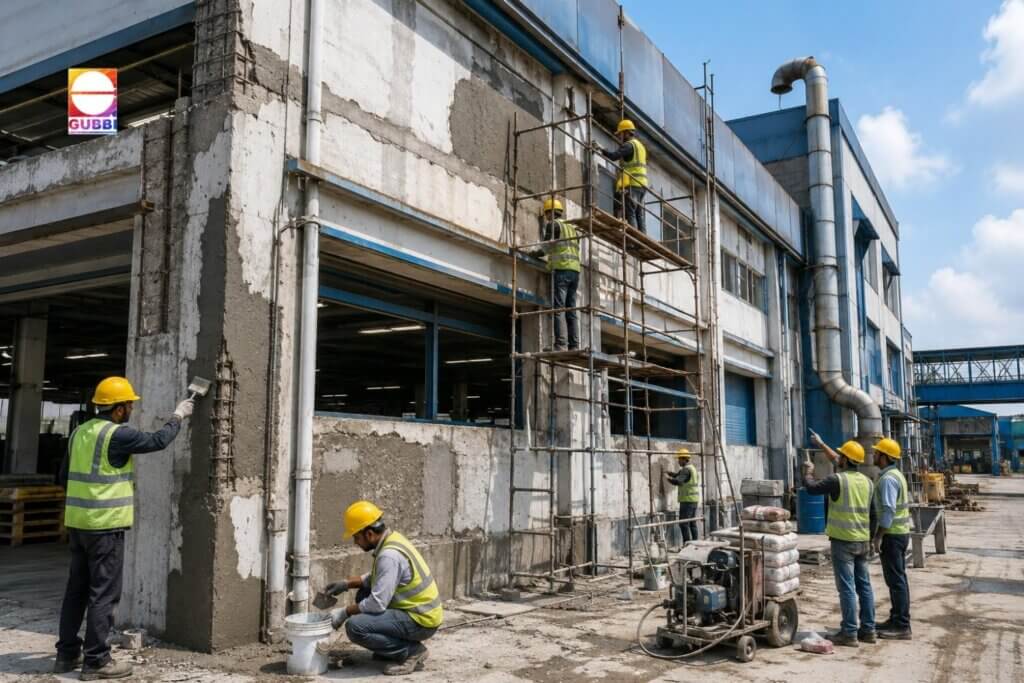
Building Rehabilitation Services play a critical role in restoring the safety, durability, and structural performance of aging buildings affected by time, environmental exposure, water ingress, poor maintenance, and increasing load demands. Over the years, buildings may develop visible signs of deterioration such as wall cracks, concrete spalling, seepage, reinforcement corrosion, structural distress, and reduced load-bearing capacity. Ignoring these warning signs can result in costly repairs, occupant safety risks, and even structural failure.
Instead of opting for complete demolition, professional Building Rehabilitation offers a technically sound and cost-effective approach to restore structural integrity, strengthen weakened RCC components, improve functionality, and extend the building’s lifespan. Whether it is a residential apartment, commercial complex, industrial facility, bridge, or aging RCC structure, rehabilitation helps restore long-term performance while preventing further deterioration.
What Is Building Rehabilitation?
Building Rehabilitation is the process of restoring, repairing, strengthening, and upgrading an existing structure to improve its safety, durability, functionality, and service life.
Unlike cosmetic renovation, rehabilitation focuses on addressing the structural and durability-related problems of a building. It includes identifying root causes of deterioration and implementing engineering solutions to restore structural integrity.
Professional Building Repair and Rehabilitation Services may include:
- Structural assessment and condition surveys
- RCC repair and strengthening
- Crack repair and epoxy injection grouting
- Waterproofing treatment
- Concrete restoration
- Steel jacketing and column strengthening
- Structural retrofitting solutions
- Corrosion treatment for reinforcement steel
- Foundation strengthening and load enhancement
The goal is not only to repair visible damage but also to prevent future deterioration.
Why Aging Buildings Need Rehabilitation?
Over time, buildings experience continuous stress due to environmental conditions, occupancy loads, moisture penetration, and material aging. Structures built decades ago may no longer meet current safety or performance standards.
Below are the major reasons aging buildings require professional Building Rehabilitation Services.
1. Structural Deterioration Over Time
Concrete naturally deteriorates with age. Exposure to weather, moisture, pollutants, and thermal expansion gradually weakens RCC components.
Common signs include:
- Concrete cracks
- Surface deterioration
- Honeycombing
- Concrete spalling
- Rust stains on columns and beams
- Exposed reinforcement bars
If ignored, these issues can compromise structural safety and increase repair costs.
A professional rehabilitation contractor conducts structural inspections to determine the severity of deterioration and recommend suitable repair strategies.
2. Reinforcement Corrosion in RCC Structures
One of the biggest concerns in aging buildings is corrosion of steel reinforcement.
When water penetrates concrete through cracks or damaged waterproofing, reinforcement steel begins to rust. Rust expansion causes concrete cracking and spalling, reducing the strength of structural elements such as:
- Columns
- Beams
- Slabs
- Foundations
In coastal and high-moisture environments, corrosion progresses even faster.
Building Rehabilitation Services help arrest corrosion through anti-corrosion treatments, concrete restoration, protective coatings, and strengthening methods.
3. Water Leakage and Waterproofing Failure
Water infiltration is one of the leading causes of structural deterioration.
Terraces, roofs, bathrooms, podiums, and external walls are highly vulnerable to leakage. Persistent seepage weakens concrete, damages interiors, accelerates corrosion, and reduces structural life.
Signs of waterproofing failure include:
- Damp walls
- Ceiling leakage
- Mold formation
- Efflorescence
- Paint peeling
- Structural cracks
Professional rehabilitation often includes advanced waterproofing systems to stop water ingress and protect structural components from long-term damage.
4. Increased Load Requirements
Many older buildings were designed for lower occupancy and usage loads.
Modern requirements such as:
- Additional floors
- Heavy machinery installation
- Commercial conversion
- Increased occupancy loads
- Structural modifications
may exceed the original design capacity.
In such cases, Building Rehabilitation Contractors implement strengthening techniques such as:
- Steel jacketing of columns
- RCC jacketing
- Carbon fiber reinforcement
- Structural retrofitting
These methods improve load-bearing performance without complete reconstruction.
5. Safety Risks in Aging Structures
Visible cracks and deterioration are not merely cosmetic issues—they may indicate serious structural distress.
Buildings experiencing:
- Major beam cracks
- Column damage
- Settlement issues
- Excessive deflection
- Structural instability
require immediate engineering evaluation.
Timely building repair and rehabilitation minimizes risks to occupants and prevents catastrophic structural failures.
For residential societies, commercial property owners, and facility managers, proactive rehabilitation is often more affordable than emergency repairs after severe damage.
Key Signs Your Building May Need Rehabilitation
Many property owners delay intervention because they assume minor defects are harmless. However, early rehabilitation can significantly reduce repair costs.
You should consider Building Rehabilitation Services if your property shows:
Structural Warning Signs
- Cracks in beams, columns, or slabs
- Sagging or uneven floors
- Exposed reinforcement steel
- Structural settlement
Durability Issues
- Water seepage or dampness
- Concrete spalling
- Surface deterioration
- Corrosion stains
Functional Problems
- Reduced building performance
- Difficulty in maintenance
- Aging façade systems
- Increasing repair frequency
If these problems persist, a structural audit becomes necessary.
Benefits of Building Rehabilitation Services
Extends Building Life
One of the biggest advantages of rehabilitation is extending the usable lifespan of a structure by several decades.
Instead of demolition, targeted repairs restore performance and improve durability.
Improves Structural Safety
Rehabilitation strengthens weakened RCC components and reduces safety risks for occupants.
This is especially important for aging residential societies, commercial buildings, industrial facilities, and public infrastructure.
Cost-Effective Alternative to Reconstruction
Demolition and rebuilding require significant time, approvals, and capital investment.
Building Rehabilitation offers a practical and economical alternative while preserving the existing structure.
Improves Property Value
A structurally sound building with upgraded waterproofing, repaired RCC components, and improved durability attracts better property valuation and tenant confidence.
Prevents Future Structural Damage
Professional rehabilitation focuses on solving root causes not temporary patch repairs.
This helps avoid recurring cracks, leakage, and deterioration.
Why Professional Building Rehabilitation Contractors Matter?
Building rehabilitation is not a trial-and-error process.
Poor workmanship, incorrect material selection, and temporary patch repairs often lead to recurring failures.
Professional Building Rehabilitation Contractors perform:
- Detailed condition assessment
- Structural analysis
- Non-destructive testing (NDT)
- Root cause investigation
- Technical repair methodology
- Long-term rehabilitation planning
An experienced civil engineering team ensures the building is repaired using technically proven and durable solutions.
How do I know if my building needs rehabilitation?
Signs such as structural cracks, concrete spalling, seepage, rust stains, dampness, and exposed reinforcement may indicate the need for rehabilitation.
Is building rehabilitation better than demolition?
In many cases, yes. Rehabilitation is often more cost-effective, faster, and less disruptive than complete reconstruction.
What is the lifespan extension after rehabilitation?
Depending on structural condition and repair quality, rehabilitation can extend building life by several decades.
What is included in Building Rehabilitation Services?
Services typically include structural repairs, RCC strengthening, waterproofing, crack repair, retrofitting, corrosion treatment, and durability enhancement.
Conclusion
Aging buildings naturally deteriorate over time, but neglecting structural warning signs can lead to expensive damage and serious safety concerns. Cracks, seepage, corrosion, concrete deterioration, and reduced structural strength should never be ignored.
Building Rehabilitation Services help restore structural integrity, improve durability, prevent future deterioration, and significantly extend building life.
Whether your property is experiencing RCC damage, waterproofing failures, structural distress, or aging-related deterioration, timely intervention from experienced Building Rehabilitation Contractors can protect your investment and ensure long-term structural performance.