Corrosion inside reinforced concrete (RCC) structures is rarely an isolated defect it is a progressive structural deterioration process that directly affects durability, serviceability, and load-carrying capacity. While surface cracks and concrete spalling are the visible consequences, the actual damage occurs around embedded reinforcement where corrosion gradually weakens the structural system.
For industries, commercial buildings, infrastructure owners, and facility managers, timely intervention by experienced Structural Repair Contractors is essential to prevent localized damage from developing into major structural rehabilitation projects. Modern Structural Repair Services go far beyond patch repairs, combining structural investigation, engineering analysis, advanced repair materials, and strengthening techniques to restore both safety and long-term performance.
We examine how engineering-led structural repair contractors strategies effectively address corrosion-damaged concrete structures and why understanding the root cause is the key to durable rehabilitation.
Corrosion Is More Than a Concrete Surface Problem
Many deteriorating RCC structures initially exhibit minor cracks, rust stains, or localized concrete spalling. These signs are often mistaken for cosmetic defects, leading to temporary repairs that fail within a short period.
In reality, reinforcement corrosion begins deep inside the concrete.
Concrete naturally protects embedded steel through its highly alkaline environment. However, prolonged exposure to moisture, chlorides, carbon dioxide, industrial chemicals, or poor-quality concrete gradually destroys this protective layer. Once the passive protection is lost, steel begins to corrode.
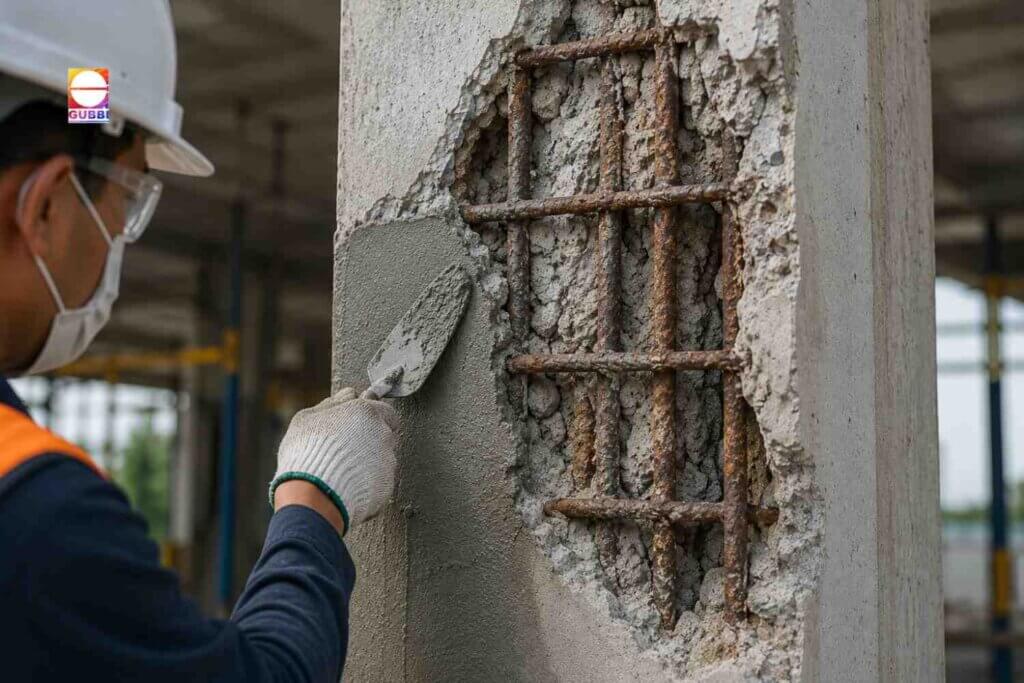
As corrosion products occupy a significantly larger volume than the original steel, internal expansion creates tensile stresses that concrete cannot resist. The result is progressive cracking, delamination, and eventually the loss of concrete cover.
Without proper engineering intervention, deterioration continues even after visible defects are repaired.
Common Causes of Reinforcement Corrosion
Every structure experiences different environmental exposure, making it essential to identify the exact deterioration mechanism before selecting a repair methodology.
The most common causes include:
-
- Carbonation of concrete reducing alkalinity
-
- Chloride penetration in coastal and marine environments
-
- Continuous water seepage and moisture ingress
-
- Industrial chemical exposure
-
- Inadequate concrete cover over reinforcement
-
- Poor concrete compaction creating permeable zones
-
- Construction defects and honeycombing
-
- Age-related material degradation
Understanding which mechanism initiated corrosion allows engineers to select repair systems that address the cause rather than only the symptoms.
Why Professional Structural Investigation Comes First?
One of the biggest mistakes in rehabilitation projects is selecting repair materials before understanding the condition of the structure.
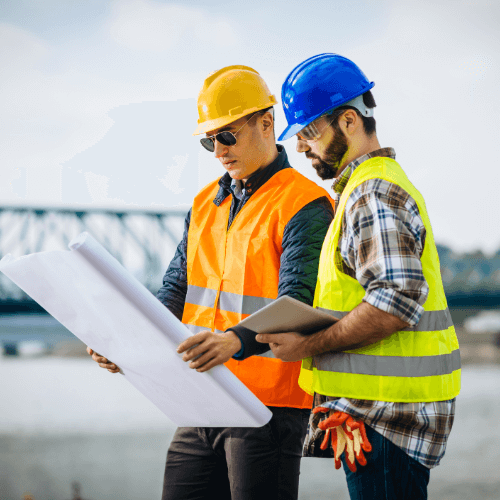
Experienced Structural Repair Contractors begin every rehabilitation project with a comprehensive structural condition assessment instead of immediately recommending repairs.
The objective is to answer critical engineering questions:
-
- How extensive is the reinforcement corrosion?
-
- Has the reinforcement lost significant cross-sectional area?
-
- Is deterioration localized or widespread?
-
- Has the structural capacity reduced?
-
- Can repairs restore performance, or is strengthening required?
Without these answers, repair work becomes largely based on assumptions.
Structural Repair Is Not Just Concrete Replacement
Many repair failures occur because only damaged concrete is replaced while active corrosion continues beneath the repaired surface.
Professional Structural Repairs sfollow a much more comprehensive process.
Typical rehabilitation involves:
Removal of Unsound Concrete
Loose, cracked, delaminated, and contaminated concrete is carefully removed until sound concrete is reached.
Proper concrete removal prevents hidden corrosion from remaining beneath repair materials.
Reinforcement Treatment
After exposing reinforcement, engineers evaluate its condition.
Depending on the corrosion severity, reinforcement may require:
-
- Mechanical cleaning
-
- Rust removal
-
- Protective corrosion treatment
-
- Partial bar replacement
-
- Additional reinforcement installation where structural analysis requires it
This stage largely determines the long-term success of the repair.
Concrete Section Restoration
The damaged section is reconstructed using engineered repair materials selected for compatibility with the existing concrete.
Material selection considers:
-
- Bond strength
-
- Shrinkage characteristics
-
- Elastic modulus
-
- Durability
-
- Permeability
-
- Thermal compatibility
Choosing compatible repair materials minimizes future cracking and differential movement.
Durability Is the Real Measure of Repair Success
Repairing concrete without preventing future corrosion often results in recurring deterioration within a few years.
Successful rehabilitation therefore includes long-term durability enhancement measures such as:
-
- Anti-carbonation protective coatings
-
- Waterproofing systems
-
- Corrosion inhibitors
-
- Crack injection systems
-
- Joint sealing
-
- Moisture control improvements
-
- Drainage corrections
-
- Surface protection coatings
These measures interrupt future deterioration and significantly extend service life.
Structures Most Vulnerable to Corrosion Damage
Corrosion-related deterioration affects almost every sector where reinforced concrete is exposed to moisture or aggressive environments.
Typical applications include:
-
- Industrial manufacturing plants
-
- Chemical processing facilities
-
- Power plants
-
- Bridges and flyovers
-
- Marine structures
-
- Water retaining structures
-
- Commercial buildings
-
- Institutional campuses
-
- Warehouses
-
- Parking structures
Regular structural assessment allows owners to identify deterioration beforemajor rehabilitation becomes necessary.
When Should You Consider Structural Repair Services?
Waiting until concrete begins falling from the structure often leads to significantly higher rehabilitation costs.
A professional evaluation should be scheduled if a structure shows:
-
- Longitudinal reinforcement cracks
-
- Concrete spalling
-
- Rust stains
-
- Water seepage
-
- Exposed reinforcement
-
- Hollow concrete surfaces
-
- Progressive crack widening
-
- Recurring repair failures
-
- Signs of structural distress
Early intervention usually requires less extensive repairs while preserving the original structural capacity.
How do Structural Repair Contractors determine the extent of corrosion?
They conduct detailed condition assessments using visual inspections, non-destructive testing (NDT), carbonation testing, chloride analysis, reinforcement mapping, and structural evaluation before recommending repair solutions.
Can corrosion-damaged concrete structures be repaired instead of rebuilt?
Yes. Many structures can be restored through engineered repair and strengthening solutions when the remaining structural capacity is sufficient and deterioration is addressed early.
What do professional Structural Repair Services include?
They typically include structural investigation, deterioration assessment, repair methodology development, concrete restoration, reinforcement treatment, structural strengthening, protective coatings, waterproofing integration, and quality-controlled execution.
Why do repaired concrete structures sometimes deteriorate again?
Recurring deterioration usually occurs when the root cause of corrosion such as moisture ingress, chloride contamination, or carbonation is not eliminated, or when repairs are carried out without proper engineering assessment and quality control.
How can future corrosion be minimized after repair?
Long-term durability is improved by combining concrete repair with waterproofing, protective coatings, crack sealing, corrosion protection systems, proper drainage, and periodic structural inspections.
Conclusion
Corrosion-damaged concrete structures require far more than surface repairs. Successful rehabilitation begins with understanding the deterioration mechanism, assessing residual structural capacity, and implementing repair strategies based on engineering principles rather than temporary solutions.
Experienced Structural Repair Contractors combine investigation, structural analysis, material science, and quality execution to deliver durable rehabilitation solutions. Well-planned Structural Repair Services not only restore structural integrity but also extend service life, improve safety, reduce lifecycle costs, and help owners maximize the value of existing infrastructure.
For industries and infrastructure owners, investing in professional structural repair at the right time is not simply a maintenance decision it is a strategic investment in long-term asset performance.