
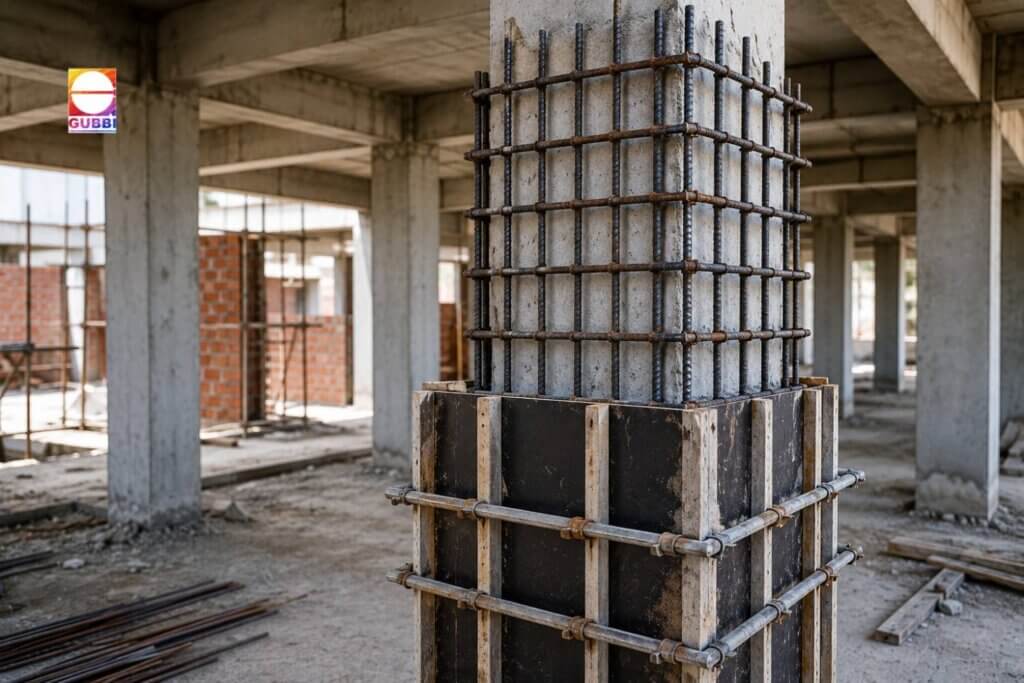
Structural Strengthening Services Using Column Jacketing for Existing RCC Buildings
Structural Strengthening Services play a critical role in restoring and enhancing the performance of existing reinforced concrete (RCC) buildings that no longer satisfy present-day structural demands. A building rarely reaches a point of structural inadequacy overnight. The need for strengthening develops gradually due to increased loading, ageing, material deterioration, changes in occupancy, seismic compliance requirements, or structural modifications that exceed the original design assumptions. While these conditions may compromise structural capacity, they do not necessarily require demolition. With a systematic engineering approach, existing structures can be strengthened to safely meet current and future performance requirements.
Among the various structural strengthening techniques available today, column jacketing remains one of the most reliable and widely adopted solutions for improving the load-carrying capacity, stiffness, and overall structural performance of RCC buildings. However, effective strengthening is not achieved simply by increasing the dimensions of a column. It requires a comprehensive assessment of the existing structural system, identification of structural deficiencies, and engineering-led design to ensure the strengthened member performs as an integral part of the overall load-resisting system.
Why Structural Strengthening Becomes Necessary?
Many buildings currently in service were designed for loading conditions and design codes that differ significantly from present-day requirements. As buildings evolve to accommodate additional floors, heavier equipment, increased occupancy, or functional modifications, the demand on structural members often exceeds their original design capacity.
Similarly, long-term exposure to aggressive environmental conditions can reduce the strength and durability of reinforced concrete through reinforcement corrosion, carbonation, chloride ingress, repeated moisture exposure, or poor maintenance. These factors gradually diminish the structural reliability of critical load-bearing elements, particularly columns.
Structural strengthening becomes essential when engineering evaluation indicates that the existing members cannot safely resist the required design loads or when the owner intends to extend the building’s functionality without compromising structural safety.
Why Column Jacketing is Preferred for Structural Strengthening?
Columns form the primary vertical load path of any RCC building. Any reduction in their capacity directly affects the safety and stability of the entire structural system. When structural analysis identifies inadequate axial, flexural, or shear capacity, column jacketing provides an effective means of restoring and enhancing structural performance without replacing the existing member.
Unlike surface repairs that address only visible deterioration, column jacketing upgrades the structural behaviour of the member by increasing its effective cross-section, improving reinforcement detailing, enhancing confinement, and enabling the column to safely resist higher design loads.
The objective is not simply to add concrete around an existing column but to develop a composite structural member capable of performing under revised loading conditions while maintaining compatibility with the surrounding structural system.
Engineering Assessment Before Selecting Column Jacketing
Column jacketing should never be considered as a standard repair solution for every distressed structure. The suitability of any strengthening method depends entirely on the findings of a comprehensive structural investigation.
A professional structural strengthening program begins with a detailed engineering assessment that typically includes visual inspection, non-destructive testing, reinforcement mapping, material evaluation, and structural analysis. These investigations help engineers determine the actual condition of the existing concrete, identify the causes of deterioration, evaluate residual structural capacity, and establish whether column jacketing is the most appropriate strengthening solution.
Only after understanding the structural deficiencies, load paths, and future performance requirements can an effective strengthening scheme be developed.
Engineering Considerations That Influence Column Jacketing Design
The effectiveness of column jacketing depends far more on engineering design than on the construction process itself. Every strengthening project must consider how the upgraded column will interact with the existing structural system and transfer loads safely throughout its service life.
Key design considerations include the existing concrete strength, reinforcement condition, bond behaviour between old and new concrete, confinement requirements, load transfer mechanisms, shear connector detailing, foundation adequacy, and anticipated future loading. Proper detailing ensures that the existing and newly added concrete act together as a single structural member rather than as separate components.
Ignoring these engineering considerations may reduce the effectiveness of strengthening and compromise long-term structural performance.
How Column Jacketing Improves Structural Performance?
When properly designed and executed, column jacketing significantly enhances the structural performance of RCC buildings by increasing axial load capacity, improving flexural and shear resistance, enhancing ductility, and providing better confinement to the existing concrete core.
The strengthened columns become capable of accommodating revised loading conditions while improving the overall stability of the structural system. In seismic regions, improved ductility and confinement also contribute to better structural behaviour during earthquake loading.
Beyond strength enhancement, professionally designed column jacketing extends the service life of existing buildings by addressing structural deficiencies before they develop into major safety concerns.
Applications of Structural Strengthening Using Column Jacketing
Column jacketing services are widely adopted across commercial, industrial, institutional, and infrastructure projects where existing structural members require capacity enhancement. It is commonly specified for buildings undergoing vertical expansion, industrial facilities installing heavier machinery, ageing structures experiencing reinforcement corrosion, and buildings requiring seismic upgrading to satisfy current engineering standards.
Because every structure possesses unique loading conditions and deterioration mechanisms, strengthening solutions should always be developed through project-specific engineering analysis rather than standardized construction practices.
Engineering Expertise Determines Long-Term Performance
Structural strengthening is not merely a construction activity it is an engineering discipline that integrates structural investigation, material evaluation, analytical design, and quality-controlled execution. Selecting a strengthening method without first understanding the underlying structural deficiencies often leads to recurring distress, inefficient repairs, and avoidable expenditure.
Professional Structural Strengthening Services focus on restoring structural reliability through scientifically designed structural rehabilitation strategies that improve safety, durability, and long-term performance. When supported by detailed engineering assessment and properly executed column jacketing, existing RCC buildings can continue to serve their intended purpose for decades while meeting modern structural performance requirements.
At Gubbi Civil Engineers, every structural strengthening project begins with engineering investigation and ends with performance-driven rehabilitation solutions tailored to the specific needs of the structure. Our approach ensures that column jacketing is recommended only where it delivers measurable improvements in structural safety, load-carrying capacity, and service life, providing building owners with technically sound and sustainable structural repair solutions.