
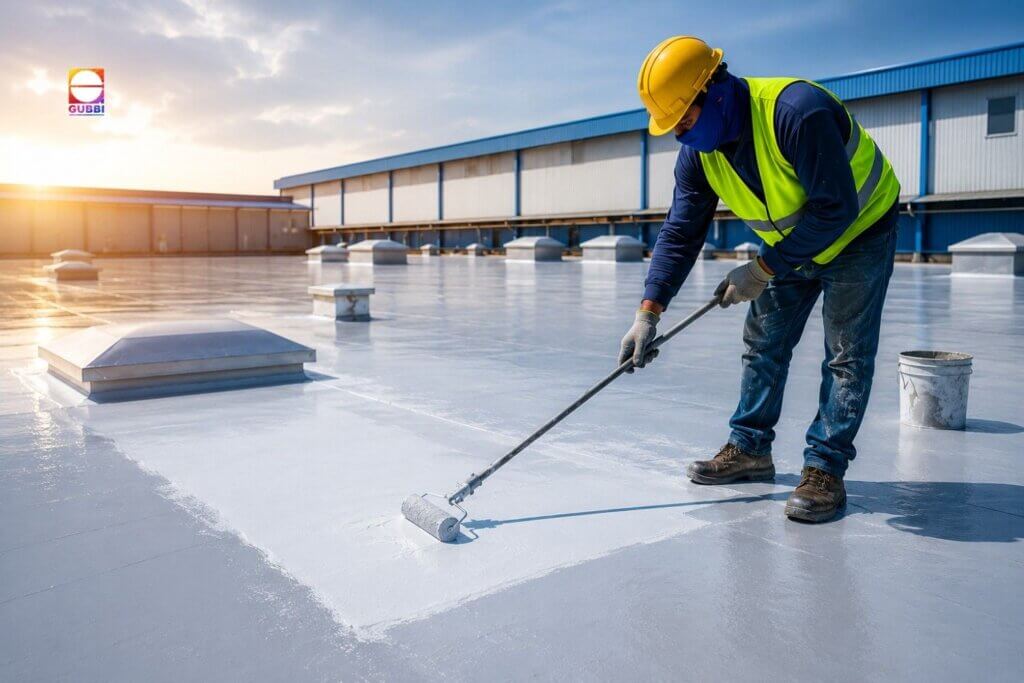
Warehouse Roof Waterproofing plays a critical role in protecting high-value industrial assets, where roof performance directly impacts operational continuity, inventory protection, equipment reliability, and maintenance costs. Unlike commercial buildings, warehouse roofs cover large uninterrupted spans and are continuously exposed to thermal cycling, UV radiation, heavy rainfall, wind uplift, and environmental pollutants. Over time, these conditions degrade the roof system, allowing water ingress that can damage stored materials, corrode structural elements, and interrupt production.
Effective Roof Waterproofing Services are not limited to applying a coating over a leaking surface. A durable waterproofing solution begins with understanding the root cause of failure, evaluating the roof condition, and selecting a waterproofing system compatible with the existing substrate and service conditions.
Common Problems Affecting Warehouse Roof Waterproofing
Waterproofing Membrane Deterioration
Waterproofing membranes gradually lose flexibility due to prolonged UV exposure, weathering, and thermal movement. Aging membranes often develop cracks, blisters, debonding, or surface wear, allowing rainwater to penetrate the roofing system.
Where the membrane has exceeded its service life, localized patch repairs rarely provide a permanent solution, making complete rehabilitation more economical in the long term.
Water Ponding Due to Poor Roof Drainage
Standing water is one of the primary reasons for premature waterproofing failure. Inadequate roof slopes, blocked rainwater outlets, or localized depressions keep water on the roof for extended periods, increasing hydrostatic pressure on the waterproofing layer.
Persistent ponding accelerates membrane deterioration and increases the likelihood of leakage through joints, cracks, and construction interfaces.
Leakage at Expansion Joints
Warehouse roofs undergo continuous expansion and contraction due to temperature variations. Expansion joints accommodate these movements, but over time sealants lose elasticity, crack, or separate from the substrate.
Once joint integrity is compromised, water easily penetrates beneath the waterproofing layer and travels considerable distances before becoming visible inside the building.
Roof Penetration Failures
Every roof penetration including HVAC equipment, exhaust ducts, vent pipes, cable trays, solar mounting systems, and service conduits creates a potential leakage point.
Improper detailing, aging sealants, or inadequate flashing around these penetrations are among the most common causes of recurring roof leakage in industrial buildings.
Cracks in RCC Roof Slabs
Concrete roof slabs naturally develop shrinkage, thermal, or structural cracks during their service life. While not every crack results in leakage, active or interconnected cracks provide direct pathways for moisture infiltration.
Surface waterproofing without addressing crack behavior often leads to repeated failures.
Corrosion in Metal Roof Systems
Industrial metal roofing systems commonly deteriorate around fasteners, overlaps, flashings, and valleys. Corrosion enlarges openings, weakens sheet connections, and eventually allows water ingress during rainfall.
Early intervention prevents localized corrosion from developing into extensive roof replacement.
Engineering Assessment Before Waterproofing
Successful roof waterproofing depends on accurate diagnosis rather than trial-and-error repairs. A professional engineering assessment typically includes:
- Visual condition survey of the roof system
- Mapping of cracks and leakage locations
- Inspection of expansion joints and roof penetrations
- Moisture investigation to identify trapped water beneath waterproofing layers
- Evaluation of roof slopes and drainage performance
- Assessment of existing waterproofing materials and their remaining serviceability
Identifying the actual failure mechanism ensures that repair measures address the source of leakage rather than its visible symptoms.
Solutions for Warehouse Roof Waterproofing
The selection of waterproofing systems depends on roof construction, exposure conditions, structural movement, and the extent of deterioration.
Liquid Applied Polyurethane Waterproofing
Polyurethane systems form a seamless waterproof membrane with excellent adhesion and crack-bridging capability, making them suitable for RCC warehouse roofs subjected to moderate structural movement.
Elastomeric Acrylic Waterproof Coatings
Acrylic coatings provide weather protection, UV resistance, and thermal reflectivity while restoring the waterproofing performance of roofs with minor surface deterioration.
APP/SBS Bituminous Membrane Systems
Torch-applied bituminous membranes remain one of the most reliable waterproofing systems for industrial roofs due to their durability, puncture resistance, and long service life when installed with proper detailing.
Expansion Joint Waterproofing
Failed expansion joints require removal of deteriorated sealants, joint preparation, installation of flexible sealant systems, and compatible waterproofing treatments capable of accommodating structural movement.
Crack Repair Prior to Waterproofing
Where leakage originates from structural cracks, pressure injection using suitable epoxy or polyurethane materials may be necessary before installing the waterproofing system to prevent continued water migration within the concrete.
Why Engineering-Based Roof Waterproofing Delivers Better Results?
Many recurring roof leaks occur because waterproofing materials are applied without addressing drainage deficiencies, structural cracks, movement joints, or substrate deterioration.
A technically designed waterproofing solution provides:
- Long-term leak protection
- Improved roof durability
- Reduced maintenance frequency
- Protection of inventory and equipment
- Extended service life of the roof structure
- Lower lifecycle repair costs
- Improved operational reliability during monsoon conditions
Conclusion
Warehouse roof leakage is rarely caused by a single defect. It is often the result of aging waterproofing systems, poor drainage, structural movement, deteriorated joints, or substrate damage working together over time.
Professional Waterproofing Services should begin with a detailed engineering assessment to identify the actual cause of water ingress before selecting appropriate repair methods. By combining proper investigation, compatible waterproofing materials, and quality installation practices, warehouse owners can achieve durable protection, minimize maintenance costs, and extend the operational life of their industrial facilities.