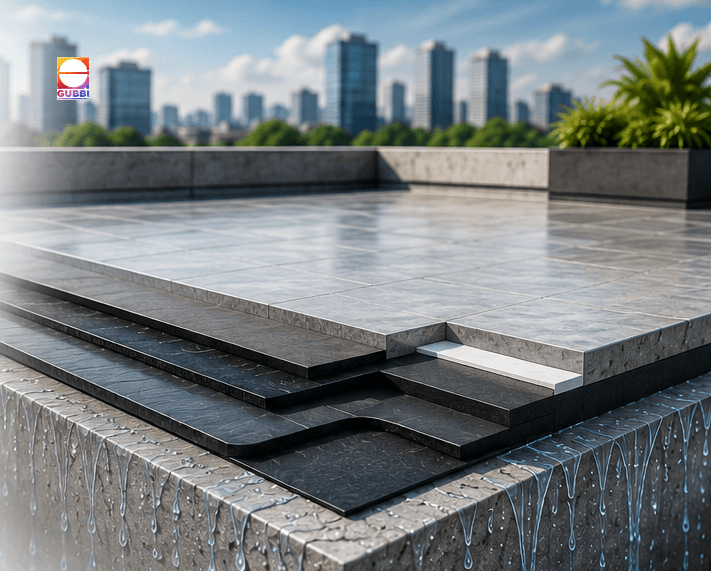
Waterproofing Technologies play a critical role in protecting buildings from water infiltration, one of the leading causes of structural deterioration. From residential homes and commercial complexes to industrial facilities and infrastructure projects, inadequate waterproofing can result in leakage, reinforcement corrosion, concrete degradation, mould growth, and costly repairs.
Modern waterproofing technologies have evolved significantly, offering durable, application-specific solutions that safeguard structures throughout their service life. Selecting the right waterproofing system during construction or structural rehabilitation helps prevent water damage, reduce maintenance costs, improve durability, and enhance the long-term performance of buildings.
Why Waterproofing is Critical for Every Structure?
Water may appear harmless, but uncontrolled moisture penetration gradually weakens structural components and accelerates deterioration.
Proper waterproofing services helps:
- Prevent water seepage and leakage
- Protect reinforced concrete from corrosion
- Increase structural durability
- Minimize repair and maintenance costs
- Improve indoor air quality by preventing dampness and mould
- Preserve architectural finishes
- Enhance the service life of buildings
Whether it is a basement, terrace, podium slab, retaining wall, water tank, bathroom, expansion joint, or roof slab, every exposed element requires an appropriate waterproofing solution.
Common Causes of Waterproofing Failure
Many waterproofing failures occur not because of poor materials, but due to improper design, incorrect product selection, or poor workmanship.
Some of the most common reasons include:
Incorrect Waterproofing System Selection
Using a waterproofing material that does not suit the structure, exposure conditions, or movement often leads to premature failure.
Poor Surface Preparation
Dust, laitance, moisture, cracks, and contaminants reduce adhesion between the waterproofing membrane and substrate.
Structural Cracks
Active cracks caused by settlement, thermal movement, or structural distress allow water to bypass waterproofing systems if not properly treated.
Improper Application
Incorrect membrane thickness, inadequate curing, poor detailing around joints, and discontinuous application compromise waterproofing performance.
Ageing and UV Exposure
Many waterproofing systems gradually deteriorate due to prolonged exposure to sunlight, weathering, and temperature variations.
Lack of Maintenance
Blocked drainage systems, damaged protective layers, and neglected minor leaks eventually develop into major waterproofing failures.
Types of Modern Waterproofing Technologies
Selecting the right waterproofing system depends on the structure’s function, exposure conditions, movement, and expected service life. Below are the most widely used waterproofing technologies in modern construction and rehabilitation.
1. Cementitious Waterproofing
Cementitious waterproofing is one of the most commonly used systems due to its ease of application and strong bond with concrete substrates.
Cementitious waterproofing is best for:
- Bathrooms and toilets
- Water tanks
- Basements
- Lift pits
- Internal wet areas
Advantages of Cementitious waterproofing:
- Easy application
- Cost-effective
- Good adhesion to concrete
- Suitable for positive-side waterproofing
2. Crystalline Waterproofing
Crystalline waterproofing reacts with moisture and cement particles to form insoluble crystals that block capillaries and microcracks within concrete.
Crystalline waterproofing is best for:
- Foundations
- Basements
- Water-retaining structures
- Sewage treatment plants
- RCC structures
Advantages of Crystalline waterproofing:
- Integral waterproofing
- Self-seals minor cracks
- Long-lasting protection
- Resists hydrostatic pressure
3. Polyurethane Waterproofing
Polyurethane systems create a seamless, highly flexible membrane capable of accommodating structural movement.
Polyurethane waterproofing is best for:
- Roofs
- Terraces
- Podium slabs
- Balconies
- Exposed concrete surfaces
Advantages of Polyurethane waterproofing:
- Excellent crack-bridging ability
- UV resistance
- High elasticity
- Durable performance
4. Bituminous Waterproofing
Bituminous membranes provide reliable waterproofing for below-grade and roof applications where moisture protection is essential.
Bituminous Waterproofing is best for:
- Roof slabs
- Foundations
- Basements
- Retaining walls
- Podiums
Advantages of Bituminous Waterproofing:
- High water resistance
- Durable membrane system
- Good mechanical strength
5. PVC Membrane Waterproofing
PVC membranes are synthetic waterproofing sheets widely used in commercial, industrial, and infrastructure projects requiring long-term durability.
BPVC Membrane Waterproofing is best for:
- Roofs
- Tunnels
- Basements
- Podium decks
- Water reservoirs
Advantages of PVC Membrane Waterproofing:
- Excellent chemical resistance
- Heat-welded joints
- Long service life
- Low maintenance
6. EPDM Membrane Waterproofing
EPDM (Ethylene Propylene Diene Monomer) is a highly flexible synthetic rubber membrane designed for demanding weather conditions.
EPDM Membrane Waterproofing isbest for:
- Large roofs
- Industrial buildings
- Green roofs
- Commercial facilities
Advantages of EPDM Membrane Waterproofing:
- Outstanding UV resistance
- Excellent weather durability
- High flexibility
- Long service life
7. Liquid Applied Membrane Waterproofing
Liquid-applied membranes cure to form a seamless waterproof barrier over complex surfaces and irregular geometries.
Liquid-applied membranes for waterproofing is best for:
- Terraces
- Balconies
- Podiums
- Roof slabs
- Refurbishment projects
Advantages of Liquid-applied membranes waterproofing:
- Seamless application
- Easy detailing around penetrations
- High flexibility
- Suitable for renovation works
8. Injection Grouting
Injection grouting is a repair technique used to stop active water leakage by injecting specialized resins into cracks, construction joints, and voids.
Common materials include polyurethane grout, epoxy grout, and acrylic gel.
Injection Grouting is best for:
- Active leak repairs
- Basements
- Retaining walls
- Underground structures
- Lift pits
Advantages of Injection Grouting:
- Stops water ingress without demolition
- Targets concealed leakage paths
- Extends structural service life
How to Choose the Right Waterproofing Solution?
Selecting the right waterproofing system depends on multiple engineering factors.
Consider:
- Type of structure
- Source of water ingress
- Crack movement
- Hydrostatic pressure
- Exposure conditions
- Expected service life
- Ease of maintenance
- Compatibility with existing construction
A detailed condition assessment helps identify the most suitable waterproofing solution while avoiding unnecessary repairs and recurring leakage issues.
Best Practices for Long-Term Waterproofing Performance
Even the best waterproofing system requires periodic inspection.
Recommended practices include:
- Inspect roofs before monsoon
- Keep drainage systems clean
- Repair minor cracks immediately
- Monitor expansion joints
- Protect exposed waterproofing layers
- Conduct periodic condition assessments
- Use qualified specialists for repairs
Preventive maintenance is significantly more economical than emergency repairs after extensive water damage.
Gubbi Civil Engineers’ Experience in Waterproofing Solutions
At Gubbi Civil Engineers, waterproofing is approached as an engineering solution rather than simply applying a coating.
Each project begins with a detailed assessment to identify the actual source of water ingress, structural condition, exposure environment, and long-term performance requirements. Based on these findings, the most appropriate waterproofing system is selected to achieve durable and cost-effective protection.
Our expertise includes waterproofing for:
- Commercial complexes
- Industrial structures
- Basements
- Terraces
- Water tanks
- Podiums
- RCC structures
- Structural rehabilitation projects
By integrating waterproofing with structural repair and rehabilitation strategies, we help clients extend the service life of their assets while minimizing future maintenance costs.
Conclusion
Waterproofing is an investment in the long-term performance and durability of any structure. Selecting the right technology, ensuring proper application, and implementing timely maintenance can prevent expensive structural damage and significantly extend the life of buildings.
Whether constructing a new facility or rehabilitating an existing one, professional assessment and application remain the foundation of effective waterproofing.
For reliable waterproofing solutions backed by engineering expertise, Gubbi Civil Engineers provides comprehensive inspection, diagnosis, repair, and protection services tailored to every structure.
Read the article published by Hello Entrepreneurs:
Modern Waterproofing Technologies
This article expands on insights shared by our Director, Sidheshwar Jamma, in an interview featured by Hello Entrepreneurs, where he discussed the importance of modern waterproofing technologies and their role in protecting structures against long-term deterioration.