
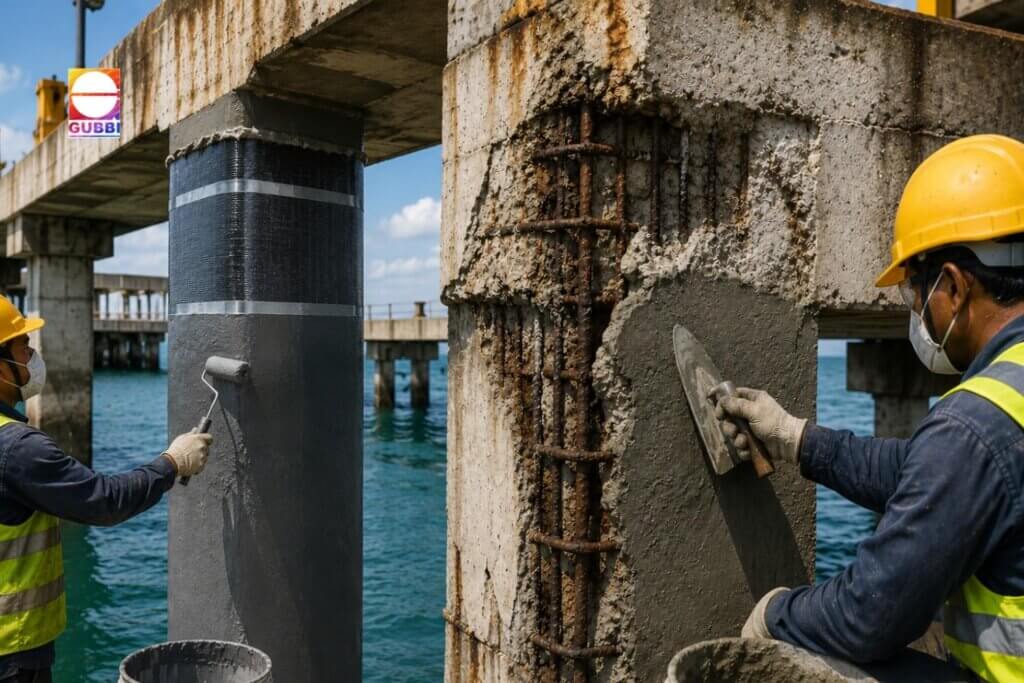
Jetty Rehabilitation is essential for restoring and strengthening marine structures affected by years of environmental exposure and structural deterioration. Jetties are among the most critical marine structures used in ports, industrial facilities, coastal plants, shipping terminals, and waterfront infrastructure. Constant exposure to seawater, chloride attack, wave action, humidity, and harsh coastal conditions often causes severe damage over time.
Concrete spalling, reinforcement corrosion, cracks, and reduced load-bearing capacity are some of the most common issues found in aging marine structures. If left untreated, these problems can lead to operational disruptions, structural safety risks, and expensive reconstruction costs.
This is where professional Jetty Rehabilitation Services become crucial. Instead of complete demolition and rebuilding, advanced rehabilitation techniques help restore structural integrity, improve durability, and extend the service life of damaged jetties while minimizing downtime and overall repair costs.
In this blog, we will explore common jetty damage problems, major causes of deterioration, effective repair methods, and how expert Jetty Repair and Rehabilitation help strengthen marine structures for long-term performance.
Why Do Jetties Deteriorate Over Time?
Marine environments are highly aggressive for reinforced concrete structures. Unlike regular buildings, jetties continuously face moisture, salt exposure, and mechanical stress.
Common Causes of Jetty Damage
1. Chloride Attack in Concrete
One of the biggest reasons behind marine structural failure is chloride penetration from seawater. Chlorides penetrate concrete and initiate corrosion in steel reinforcement.
Over time, this causes:
- Rusting of reinforcement bars
- Expansion inside concrete
- Cracks and concrete spalling
- Structural weakening
2. Reinforcement Corrosion
Corrosion reduces steel cross-section and weakens the load-carrying capacity of marine structures.
Signs include:
- Exposed reinforcement
- Rust stains
- Concrete delamination
- Structural distress
3. Wave and Tidal Action
Continuous impact of tides and waves causes erosion and deterioration in jetty surfaces and supporting elements.
4. Chemical and Environmental Exposure
Industrial jetties often face aggressive chemical exposure, humidity, carbonation, and temperature fluctuations that accelerate concrete damage.
Warning Signs Your Jetty Needs Repair
Ignoring early warning signs can increase repair costs significantly.
Here are major indicators that your jetty requires immediate rehabilitation:
- Cracks in beams, slabs, or deck areas
- Concrete spalling and surface deterioration
- Exposed or corroded reinforcement steel
- Reduced structural stability
- Water seepage and damage near foundations
- Uneven settlement or structural distress
- Surface scaling due to marine exposure
Professional inspection helps identify the exact damage severity and appropriate repair method.
Effective Jetty Rehabilitation and Repair Methods
Modern Jetty Rehabilitation Services use advanced repair technologies to restore marine structures effectively.
1. Concrete Restoration
Damaged concrete is removed and replaced using high-strength repair mortars or micro-concrete systems.
Benefits:
- Restores structural integrity
- Improves bonding strength
- Enhances durability
2. Corrosion Treatment for Reinforcement
Corroded reinforcement bars are treated with anti-corrosion systems before structural rebuilding.
This helps:
- Prevent future rusting
- Increase reinforcement life
- Improve structural safety
3. Polymer Modified Mortar (PMM) Repair
Sprayed or applied polymer mortar systems improve adhesion and resistance against marine exposure.
Advantages include:
- High bonding strength
- Better durability
- Resistance to chloride attack
4. Structural Strengthening
Weak jetty members may require strengthening through:
- RCC Jacketing
- Steel strengthening
- Carbon Fiber Reinforcement
- Structural retrofitting systems
These methods restore load-bearing performance.
5. Protective Coating Systems
Anti-carbonation and marine-grade protective coatings help protect concrete from:
- Chloride ingress
- UV damage
- Moisture penetration
- Corrosion
Protective coatings significantly increase marine structure lifespan.
Jetty Rehabilitation vs New Jetty Construction: Which Is Better?
In many cases, Jetty Rehabilitation is more economical than complete reconstruction.
Jetty Rehabilitation Benefits
- Lower cost compared to rebuilding
- Faster execution with minimal downtime
- Improved structural durability
- Extended service life
- Reduced operational disruption
However, severely damaged structures may require partial rebuilding or complete Jetty Construction Services depending on structural assessment.
A detailed engineering evaluation helps determine the right solution.
Importance of Professional Jetty Construction Services
Marine infrastructure repair is highly specialized and requires experienced structural engineers.
Professional Jetty Construction Services include:
- Structural assessment and inspection
- Marine concrete repair
- Corrosion treatment systems
- Structural strengthening
- Protective coating applications
- Rehabilitation planning
- New jetty construction and extension
Proper execution ensures safety, durability, and long-term performance in harsh coastal environments.
Final Thoughts
Marine structures are constantly exposed to aggressive environmental conditions that gradually weaken their structural performance. Timely Jetty Repair and Rehabilitation can restore damaged structures before failures become severe.
From chloride attack and reinforcement corrosion to concrete spalling and structural weakening, modern rehabilitation systems help improve durability, strength, and service life.
Whether you need Jetty Rehabilitation for marine concrete restoration, or specialized Jetty Construction Services, early engineering intervention always helps reduce long-term repair costs and operational risks.
Investing in preventive jetty repair today can help avoid major structural failures tomorrow.