In earthquake-prone regions, older buildings and structurally weak constructions often require seismic strengthening to improve safety and durability. One of the most effective methods used in structural rehabilitation is steel jacketing retrofitting. This advanced retrofitting technique strengthens weak columns, beams, and structural members, helping buildings withstand seismic forces and prevent structural failure.
At Gubbi Civil Engineers, we provide professional jacketing services designed to improve structural integrity, increase load-bearing capacity, and ensure long-term building safety.
What is Steel Jacketing Retrofitting?
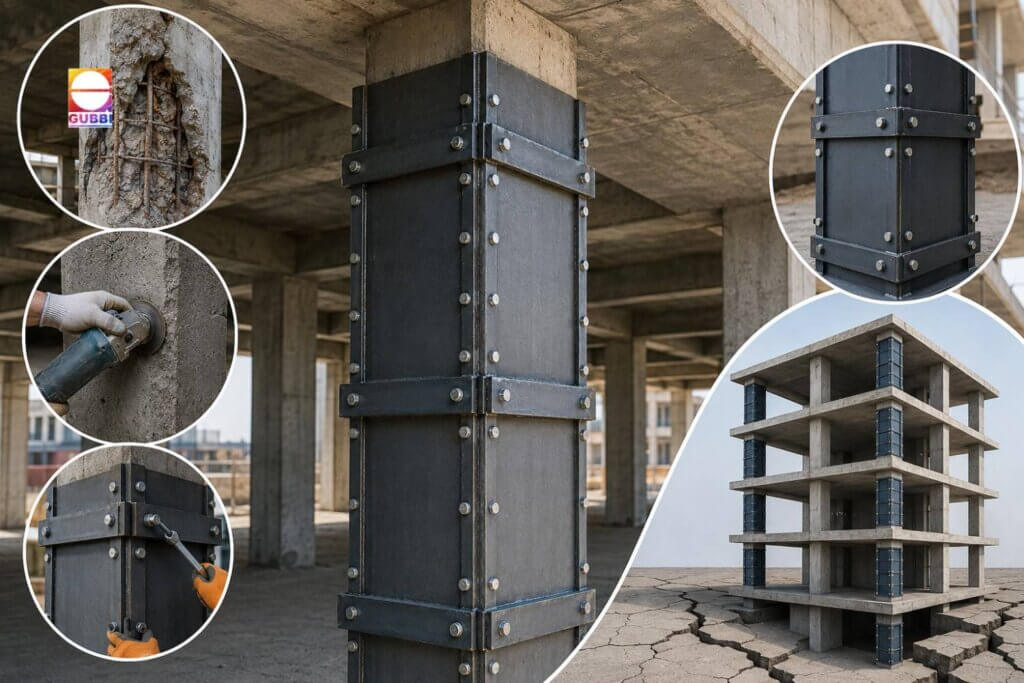
Steel jacketing retrofitting is a structural strengthening method where steel plates or steel sections are installed around existing structural members such as columns, beams, or walls. These steel jackets improve the member’s strength, stiffness, and ductility, making the building more resistant to earthquakes and structural stress.
This retrofitting technique is widely used for seismic strengthening, especially in aging buildings, damaged structures, industrial facilities, and commercial properties.
Why is Seismic Strengthening Important?
Buildings exposed to earthquakes experience strong lateral forces that can weaken structural components. Weak foundations, deteriorated columns, or poor construction practices may lead to severe damage during seismic activity.
Seismic strengthening becomes essential to:
- Improve earthquake resistance
- Increase structural stability
- Prevent column and beam failure
- Enhance load-bearing capacity
- Extend building lifespan
- Reduce risks of collapse during earthquakes
Investing in steel jacketing retrofitting for seismic strengthening helps property owners protect both lives and assets.
How Steel Jacketing Retrofitting Works?
The steel jacketing retrofitting process involves strengthening existing structural components by enclosing them with steel plates or steel sections.
1. Structural Assessment
A detailed inspection is performed to identify weak structural elements and evaluate seismic vulnerability.
2. Surface Preparation
The damaged or deteriorated concrete surface is cleaned and prepared for strengthening.
3. Steel Jacket Installation
Steel plates, angles, or channels are fixed around the column or beam.
4. Grouting or Filling
The gap between steel and concrete is filled using non-shrink grout or micro concrete to ensure proper bonding.
5. Final Strength Testing
Engineers inspect the retrofitted structure to confirm improved performance and seismic resistance.
Benefits of Steel Jacketing Retrofitting
Improved Seismic Performance
Steel jacketing significantly improves a structure’s resistance to earthquake-induced forces.
Increased Structural Strength
It enhances compressive strength and load-bearing capacity of columns and beams.
Faster Construction Time
Compared to rebuilding, steel jacketing retrofitting is quicker and less disruptive.
Cost-Effective Structural Upgrade
Retrofitting existing structures is often more affordable than demolition and reconstruction.
Minimal Structural Alteration
The method strengthens buildings without major architectural modifications.
Applications of Steel Jacketing Retrofitting
Steel jacketing retrofitting is widely used in:
- Residential buildings
- Commercial buildings
- Industrial structures
- Bridges and flyovers
- Hospitals and schools
- Earthquake-damaged buildings
- Weak RCC columns and beams
For buildings showing cracks, structural weakness, or seismic vulnerability, seismic strengthening using steel jacketing can be an ideal solution.
Signs Your Building May Need Steel Jacketing
You may require steel jacketing services if your building has:
- Structural cracks in columns or beams
- Reduced load-bearing performance
- Corrosion-related damage
- Earthquake-related structural weakening
- Aging RCC members
- Increased building load requirements
Early intervention helps avoid expensive repairs and structural risks.
Steel Jacketing by Gubbi Civil Engineers
At Gubbi Civil Engineers, we specialize in advanced steel jacketing and seismic strengthening solutions for commercial, and industrial structures.
Our services include:
- Structural inspection and assessment
- Seismic retrofitting consultation
- Steel jacketing design and execution
- RCC strengthening solutions
- High-quality materials and engineering expertise
We focus on delivering durable, safe, and technically sound retrofitting solutions tailored to your building requirements.
Conclusion
Steel jacketing retrofitting for seismic strengthening is one of the most reliable techniques to improve structural safety and earthquake resistance. Whether your building is old, damaged, or structurally weak, investing in professional retrofitting can significantly improve performance and longevity.
If you are looking for expert jacketing and retrofitting services, Gubbi Civil Engineers offers customized structural strengthening solutions to protect your building against seismic risks and structural deterioration.