
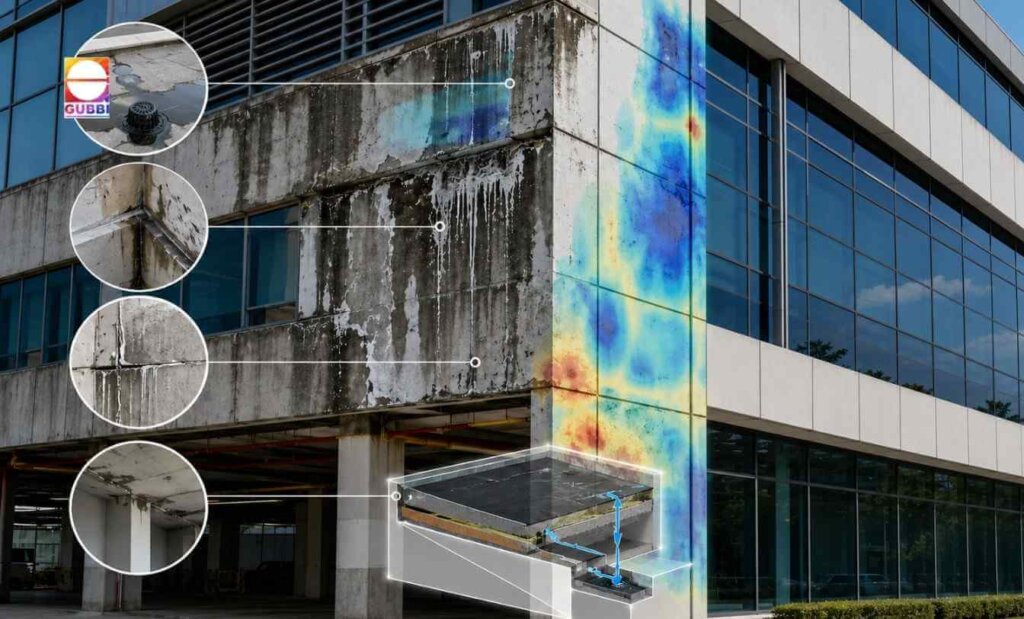
Waterproofing Failure is one of the most common yet underestimated causes of premature deterioration in buildings and infrastructure assets. While waterproofing systems are designed to prevent moisture ingress and protect structural components, many structures continue to experience leakage, dampness, and durability-related issues long before the expected service life of the waterproofing system is reached.
In many cases, the problem is not the waterproofing material itself. The root cause often lies in deficiencies during design, substrate preparation, detailing, application practices, or quality control during execution. As structures become increasingly complex and performance expectations continue to rise, understanding the factors that contribute to waterproofing failure has become essential for developers, facility managers, consultants, and asset owners.
Why Waterproofing Performance Matters?
Waterproofing is often viewed as a finishing activity completed during construction. However, from an engineering perspective, it is a critical asset protection system that directly influences the durability and long-term performance of a structure.
Failure of waterproofing systems can lead to:
- Persistent leakage and seepage
- Reinforcement corrosion
- Concrete deterioration
- Reduced structural durability
- Interior damage and operational disruptions
- Increased maintenance costs
- Premature rehabilitation requirements
For commercial buildings, industrial facilities, basements, podiums, roofs, water-retaining structures, and infrastructure projects, effective waterproofing plays a significant role in preserving structural integrity and extending service life.
Common Causes of Waterproofing Failure
1. Inadequate Surface Preparation
One of the most overlooked causes of waterproofing failure is poor substrate preparation before application.
Waterproofing materials rely on proper adhesion to the substrate. Contaminated surfaces containing dust, laitance, oil, curing compounds, loose particles, or moisture can significantly reduce bond strength and compromise system performance.
Common issues include:
- Application over unsound concrete
- Failure to remove surface contaminants
- Poor substrate profiling
- Inadequate crack treatment before waterproofing
Even high-performance waterproofing systems may fail if applied to improperly prepared surfaces.
2. Poor Detailing at Critical Locations
Waterproofing failures frequently originate at transitions, joints, penetrations, and interfaces rather than on large uninterrupted surfaces.
Critical areas include:
- Construction joints
- Expansion joints
- Pipe penetrations
- Drainage outlets
- Parapet-wall junctions
- Lift pits and basement interfaces
These locations experience movement, stress concentration, and differential behavior that require specialized detailing.
Without proper treatment, these vulnerable points become the first pathways for water ingress.
Experienced Waterproofing Contractors understand that detailing often determines the success or failure of an entire waterproofing system.
3. Incorrect Selection of Waterproofing Systems
Every structure presents unique exposure conditions and performance requirements.
A waterproofing solution suitable for a roof slab may not perform adequately in a basement or water-retaining structure.
Factors influencing system selection include:
- Hydrostatic pressure
- Exposure conditions
- Structural movement
- Environmental conditions
- Chemical exposure
- Serviceability requirements
Selecting products based solely on cost without considering project-specific requirements often results in premature waterproofing failure and recurring maintenance issues.
4. Improper Application Practices
Even properly selected materials can underperform when application procedures are not followed.
Common execution deficiencies include:
- Incorrect mixing ratios
- Inconsistent coating thickness
- Poor curing practices
- Application under unsuitable weather conditions
- Failure to follow manufacturer specifications
- Insufficient overlap in membrane systems
Waterproofing performance depends heavily on workmanship quality and adherence to application protocols.
This is why qualified waterproofing contractors invest significantly in trained personnel and site supervision.
5. Failure to Address Existing Structural Cracks
Waterproofing should never be considered a substitute for structural repair.
Cracks caused by:
- Drying shrinkage
- Thermal movement
- Settlement
- Structural distress
- Differential movement
must be properly evaluated before waterproofing installation.
Applying waterproofing directly over active cracks without addressing the underlying cause often leads to recurring leakage problems.
A comprehensive condition assessment helps identify whether crack repair, structural rehabilitation, or movement accommodation measures are required before waterproofing works commence.
6. Lack of Movement Accommodation
Buildings and infrastructure continuously experience movement due to:
- Temperature variations
- Wind loading
- Structural deflection
- Settlement
- Dynamic loading
Waterproofing systems must be designed to accommodate anticipated movements.
Failure to incorporate movement joints, flexible sealants, or compatible detailing solutions can result in membrane rupture, debonding, and leakage.
Many cases of Waterproofing Failure are directly linked to inadequate consideration of movement behavior during design and execution.
7. Poor Drainage Design
Waterproofing systems perform best when combined with effective drainage management.
Improper drainage leads to:
- Water ponding
- Increased hydrostatic pressure
- Prolonged moisture exposure
- Accelerated material degradation
Common drainage-related deficiencies include:
- Inadequate slope provision
- Blocked drainage outlets
- Poor rainwater management
- Insufficient drainage layers
Addressing drainage issues often significantly improves waterproofing performance and reduces long-term maintenance requirements.
8. Insufficient Quality Control During Execution
Many waterproofing defects remain undetected because adequate inspection procedures are not implemented during construction.
Critical quality control activities include:
- Surface preparation verification
- Material inspection
- Thickness measurement
- Adhesion testing
- Water ponding tests
- Joint inspection
- Documentation and compliance checks
A structured quality assurance process helps identify deficiencies before they become costly failures.
For large-scale projects, quality control should be considered an integral component of the waterproofing strategy rather than an optional activity.
9. Aging and Environmental Exposure
Over time, waterproofing systems are subjected to:
- UV radiation
- Temperature fluctuations
- Chemical exposure
- Mechanical wear
- Environmental contaminants
Even well-installed systems eventually experience aging-related deterioration.
Periodic inspections and preventive maintenance programs help identify degradation before significant damage occurs.
Long-term waterproofing performance depends not only on installation quality but also on ongoing asset management practices.
Early Warning Signs of Waterproofing Problems
Recognizing early symptoms can prevent extensive damage and costly repairs.
Key indicators include:
- Damp patches on walls and ceilings
- Water seepage during rainfall
- Efflorescence deposits
- Peeling paint
- Surface blistering
- Mold growth
- Corrosion staining
- Concrete spalling
When these symptoms appear, timely investigation is essential to determine the source of water ingress and prevent further deterioration.
The Importance of Professional Waterproofing Assessment
Many leakage issues are addressed through repeated patch repairs without identifying the actual root cause.
A professional waterproofing assessment typically involves:
- Visual inspection
- Crack mapping
- Moisture investigation
- Drainage evaluation
- Condition assessment
- Waterproofing system review
- Root cause analysis
This engineering-based approach enables stakeholders to develop effective repair strategies rather than relying on temporary solutions.
Why Choosing Experienced Waterproofing Contractors Matters?
The success of a waterproofing project depends as much on execution quality as it does on material selection.
Experienced Waterproofing Contractors provide:
- Proper system selection
- Detailed engineering evaluation
- Skilled application teams
- Quality control procedures
- Long-term performance-focused solutions
Rather than treating leakage symptoms, qualified professionals focus on addressing the underlying causes of Waterproofing Failure to improve durability and service life.
Conclusion
Most Waterproofing Failure cases originate long before the first visible leak appears. Poor detailing, inadequate surface preparation, improper application, insufficient quality control, and failure to address structural conditions are among the leading causes of premature waterproofing distress.
For building owners, facility managers, developers, and infrastructure stakeholders, waterproofing should be viewed as a long-term durability strategy rather than a short-term repair activity.
Investing in proper assessment, engineering-driven design, quality execution, and experienced Waterproofing Contractors can significantly reduce lifecycle costs, improve structural durability, and protect valuable assets from moisture-related deterioration.
As structures continue to age and performance expectations increase, a proactive approach to Waterproofing remains one of the most effective investments in long-term asset protection.