
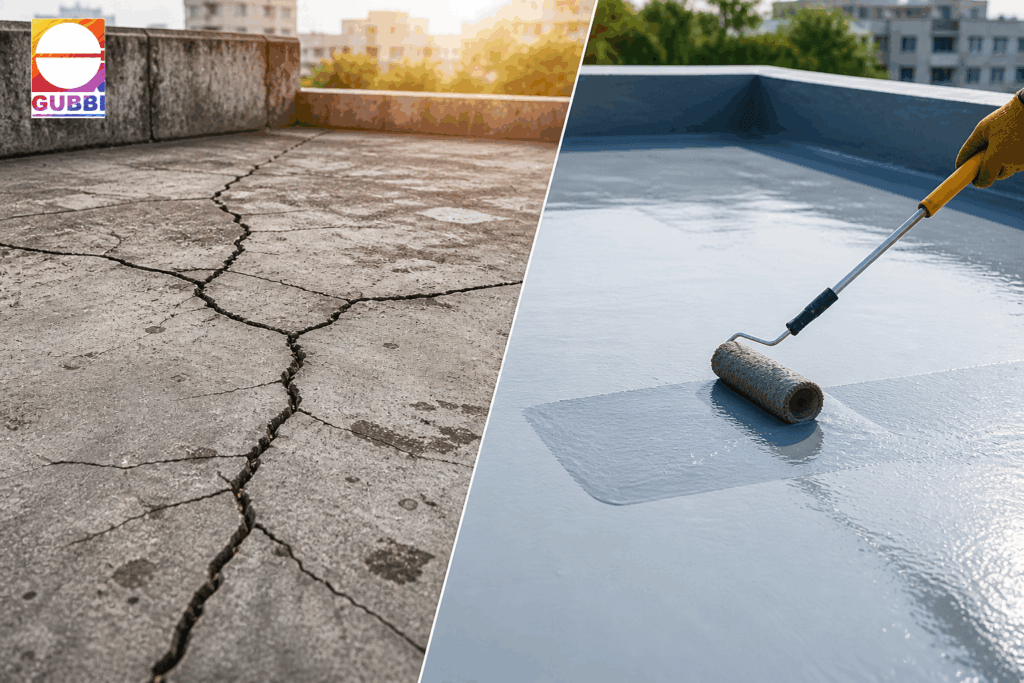
Waterproofing Chemical Guide for Roof Crack Repair
Roof cracks are one of the most common and critical issues in concrete structures, especially in regions with heavy rainfall and temperature variations. If ignored, even minor cracks can lead to water seepage, structural deterioration, corrosion of reinforcement, and interior damage.
Choosing the best waterproofing chemical for roof cracks is not just about stopping leakage it’s about ensuring long-term durability, structural integrity, and cost efficiency.
Why Roof Cracks Occur ?
Understanding the root cause helps in selecting the right waterproofing solution:
- Thermal expansion and contraction
- Shrinkage cracks in concrete
- Poor construction joints
- Water stagnation on flat roofs
- Aging and weathering of materials
- Structural movement and load stress
Each type of crack requires a specific waterproofing treatment, not a one-size-fits-all solution.
Best Waterproofing Chemicals for Roof Cracks
Polyurethane (PU) Waterproofing Chemical
Best for: Active leaks, hairline cracks, terrace waterproofing
Technical Features:
- Single or two-component system
- High elasticity (elongation > 400%)
- Deep penetration into micro-cracks
- UV resistant (with topcoat)
Advantages:
- Excellent flexibility
- Seamless waterproof membrane
- Ideal for dynamic cracks
Application Method:
- Surface cleaning
- Primer application
- PU coating (2-3 layers)
Acrylic Waterproofing Coating
Best for: Minor cracks, preventive waterproofing
Technical Features:
- Water-based polymer coating
- UV resistant and breathable
- Reflective properties reduce heat absorption
Advantages:
- Easy application
- Cost-effective
- Eco-friendly
Limitation:
- Not suitable for heavy leakage or structural cracks
Epoxy Injection Grouting
Best for: Structural cracks in RCC slabs
Technical Features:
- Low-viscosity epoxy resin
- High bonding strength
- Restores structural integrity
Advantages:
- Permanent crack sealing
- High compressive strength
- Chemical resistant
Application Method:
- Crack identification
- Injection ports installation
- Pressure grouting
Cementitious Waterproofing Compounds
Best for: Internal waterproofing and damp surfaces
Technical Features:
- Polymer-modified cement slurry
- Crystalline growth blocks pores
Advantages:
- Strong bond with concrete
- Suitable for wet areas
- Cost-efficient
Limitation:
- Limited flexibility
Bituminous Waterproofing Coatings
Best for: External roof protection
Technical Features:
- Asphalt-based coating
- Good adhesion and water resistance
Advantages:
- Economical
- Easy to apply
Limitation:
- Poor UV resistance unless protected
Which Waterproofing Chemical is Best?
From a civil engineering perspective, the best choice depends on crack type:
Crack Type | Recommended Chemical |
Hairline cracks | Acrylic or PU |
Active leakage | Polyurethane (PU) |
Structural cracks | Epoxy injection |
Dampness | Cementitious coating |
Old roof protection | Bituminous coating |
Top Recommendation:
For most residential and commercial roofs, Polyurethane waterproofing is considered the best overall solution due to its flexibility, durability, and crack-bridging capability.
Step-by-Step Roof Crack Waterproofing Process
Inspection and Crack Mapping
Surface Preparation (cleaning, wire brushing)
Crack filling or injection
Primer application
Waterproof coating application
Protective layer (if required)
Water ponding test
Common Mistakes to Avoid
- Ignoring root cause of cracks
- Using low-quality waterproofing chemicals
- Skipping surface preparation
- Applying coating on wet or dusty surfaces
- No slope for water drainage
Benefits of Using the Right Waterproofing Chemical
- Prevents water seepage and leakage
- Enhances structural life
- Reduces maintenance cost
- Improves thermal insulation
- Protects reinforcement from corrosion
What Makes Gubbi Civil Engineers the Right Choice for Roof Waterproofing?
- Advanced diagnostic inspection methods
- Use of industry-grade waterproofing chemicals
- Skilled application team
- Long-lasting and tested solutions
- Customized treatment based on crack type
FAQs
Which chemical is best for roof leakage?
Polyurethane waterproofing chemical is the best for active leakage due to its flexibility and sealing ability.
Can waterproofing permanently stop roof cracks?
Yes, with proper crack treatment like epoxy injection and PU coating, long-term solutions are possible.
How long does roof waterproofing last?
Typically 5-15 years depending on material quality and application method.
Is waterproofing necessary for new roofs?
Yes, preventive waterproofing increases lifespan and avoids future repair costs.
Conclusion
Selecting the best waterproofing chemical for roof cracks requires technical understanding, correct diagnosis, and proper application. While multiple options exist, Polyurethane and Epoxy systems stand out as the most effective solutions for long-term protection.
For professional and reliable waterproofing services, trust Gubbi Civil Engineers to deliver engineered, durable, and cost-effective solutions.